

Hi, I’m Eric. If you’ve spent any time around my shop or followed my leatherworking journey, you know that I have a deep, bordering-on-obsessive love for a well-made leather wallet. There’s just something about the way a piece of genuine hide feels in your hand: the weight, the smell, and the promise that it’s going to be by your side for every adventure for the next decade.
But here’s the thing: making a truly great wallet is a lot harder than it looks. When I first started The Kilted Leatherworker LLC, I made every mistake in the book. I had glue where it shouldn’t be, stitching that looked like a mountain range, and wallets so stiff they could probably stop a bullet (which sounds cool, but makes for a terrible pocket experience).
Whether you’re a hobbyist trying to craft your own or an enthusiast who wants to know what to look for when buying a high-quality piece, I want to share some of the most common pitfalls I’ve encountered. Understanding these "mistakes" is how we move from a basic accessory to a piece of gear that’s truly adventure-ready.
1. Rushing the Pattern and Alignment
I’ll be the first to admit it: when I get a beautiful new hide on my workbench, I want to start cutting immediately. The excitement is real. But rushing through the pattern marking is the fastest way to ruin a project before it even begins.
If your markings are off by even a millimeter, that error compounds. By the time you get to the final assembly, your card slots won’t line up, and the whole thing will look "wonky." I’ve learned that using a fine-tip marker or a dedicated leather pen is essential. I take the time to double-check every line. If it’s not perfect on the pattern, it won’t be perfect in your pocket.
2. The "Full Lamination" Trap
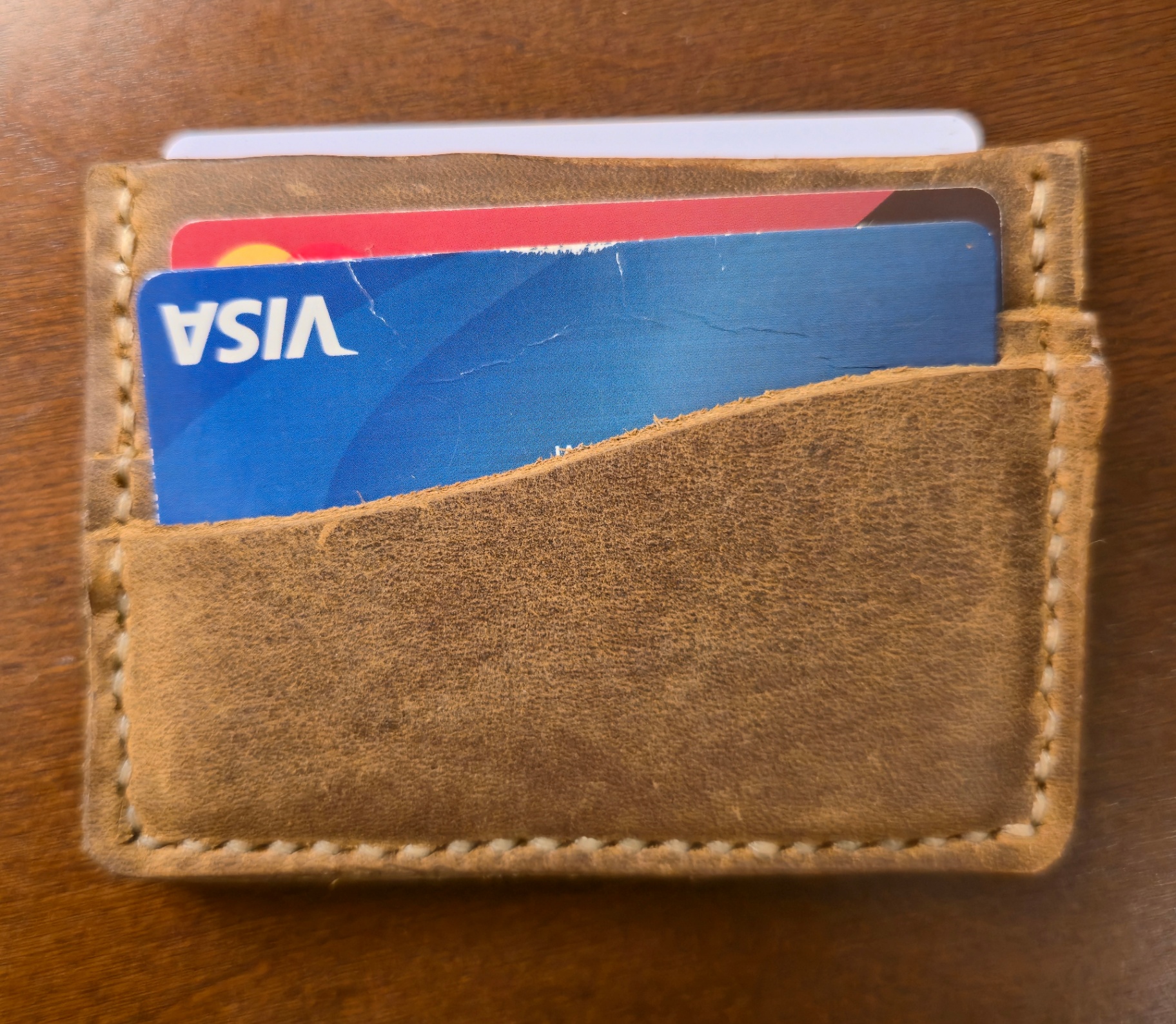
As you may have guessed, I love the feeling of a sturdy wallet. However, a common mistake I see (and one I definitely made early on) is gluing the entire lining to the exterior leather: what we call "full lamination."
While it makes the piece feel incredibly solid at first, it often results in a wallet that is way too stiff. A wallet needs to have a bit of "give." It needs to be able to bend and mold to your body and your cards. When I’m making a minimalist wallet, I use selective gluing. By only applying adhesive where it’s strictly necessary for structural integrity, I ensure the leather retains its natural flexibility. This allows it to develop that beautiful, custom fit over time.
3. Working with a Dull Knife
This is a safety issue as much as a craftsmanship one. I used to try and stretch the life of my blades, thinking I was being economical. Little did I know, a dull knife is a leatherworker's worst enemy.
A dull blade requires you to push harder and make multiple passes. Every time you have to go over a cut again, you risk the pattern shifting or the leather tearing. It leaves ragged, "hairy" edges that are a nightmare to burnish later. Now, I change my blades constantly. A sharp knife glides through the hide like butter, giving me those crisp, clean edges that define a professional piece. Plus, it’s much safer: you’re less likely to slip when you aren’t forcing the tool.

4. The Messy World of Over-Gluing
There’s an old saying in the shop: "A little goes a long way." This is especially true with leather adhesive. When you apply too much glue, it seeps out of the edges when you press the pieces together.
This creates "glue tags" that are incredibly difficult to remove without damaging the surface of the leather. If you’ve ever seen a handmade wallet with dark, sticky spots along the seams, that’s likely over-gluing. I’ve found that using a small spatula to spread a thin, even layer is the secret. You want just enough to hold the pieces in place for stitching, but not so much that it's fighting to escape the seam.
5. Trapping Air Bubbles
This one is subtle, but once you see it, you can’t unsee it. When you’re bonding two pieces of leather together: say, the outer shell and an inner pocket: it’s easy to trap air in the middle.
These bubbles create soft spots and can eventually lead to the leather delaminating. I always use a small roller, starting from the center and working my way out to the edges. It ensures a perfect, flat bond. It’s those small details, the things you might not notice at first glance, that make a piece truly "heirloom quality."
6. Inconsistent Stitching and Hole Spacing
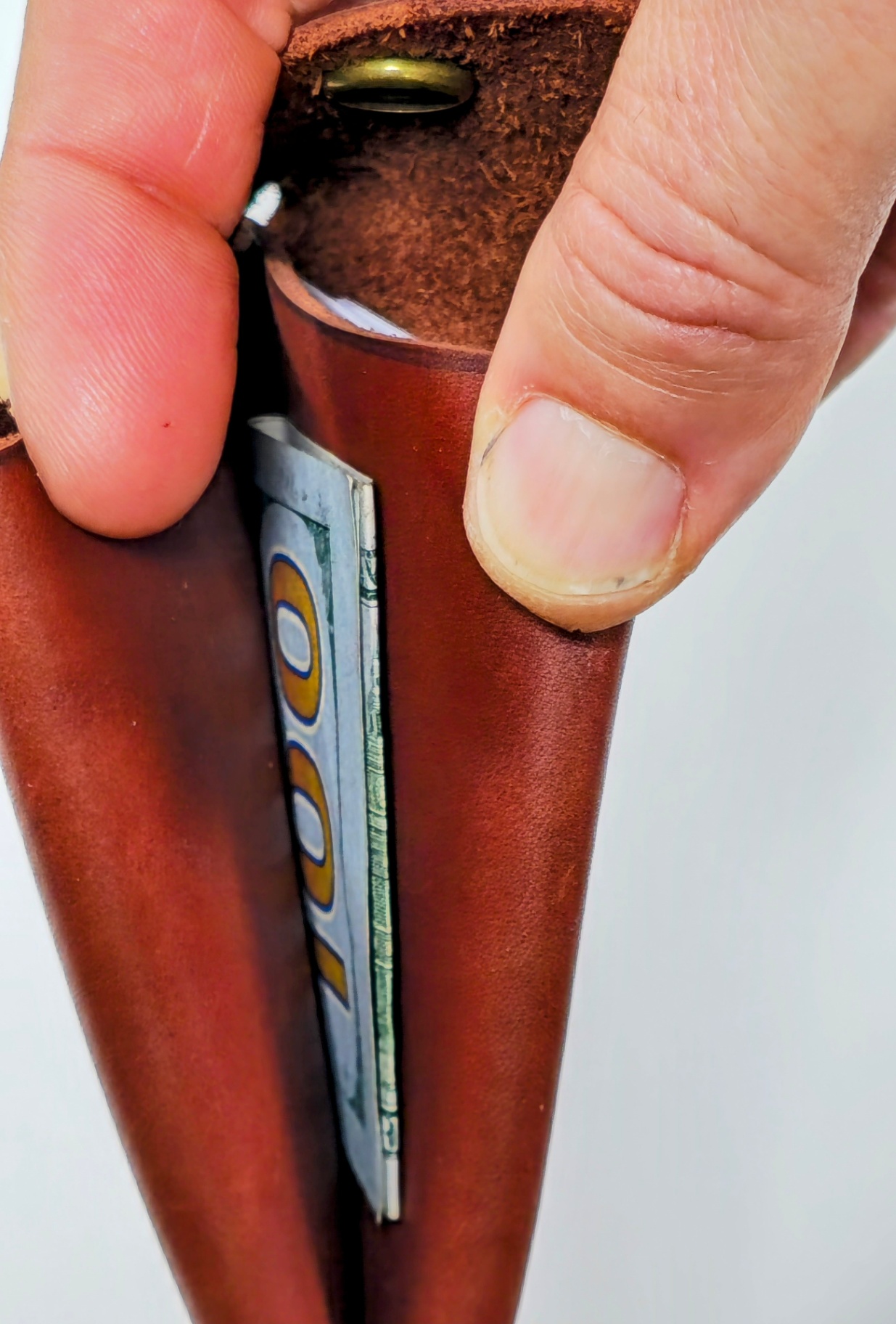
To me, the stitching is the soul of the wallet. It’s where the human element is most visible. One of the biggest mistakes is uneven hole spacing. If the holes are too far apart, the seam is weak; if they’re too close, you risk "perforating" the leather so it tears like a piece of notebook paper.
I spend a lot of time ensuring that every stitch is perfect. I use a stitching iron to mark my holes before I ever touch a mallet. This keeps the line straight and the spacing uniform. It’s a slow process: one step at a time: but it’s what makes a handmade leather journal cover or wallet look and feel superior to anything mass-produced in a factory.
7. Ignoring the Art of Skiving
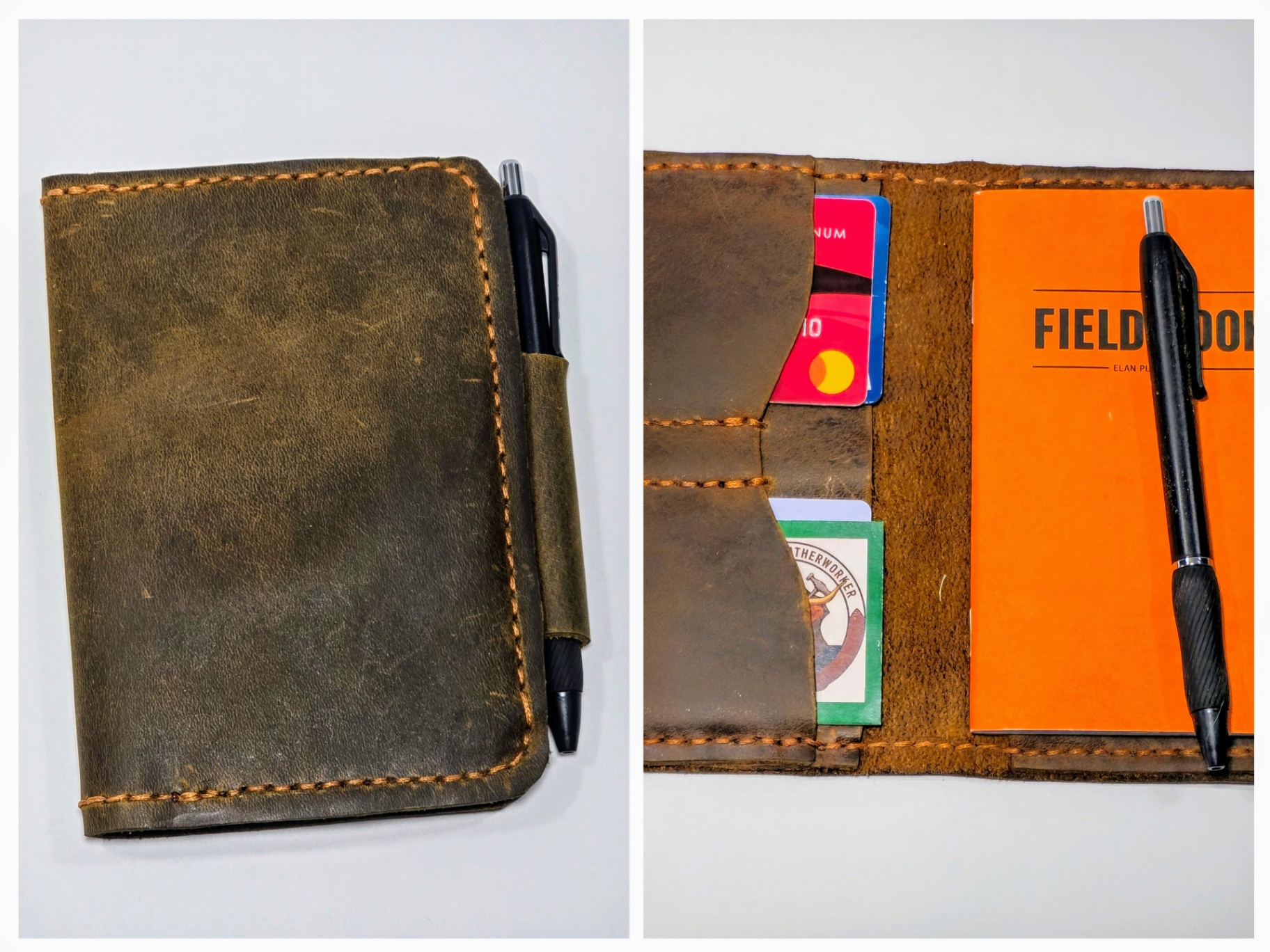
If you look at a cheap, poorly made wallet, the edges are often incredibly thick and bulky. This is usually because the maker skipped "skiving." Skiving is the process of thinning down the edges of the leather where they overlap or fold.
Without proper skiving, a wallet with multiple card slots becomes a thick brick that’s uncomfortable to carry. However, the mistake is often going too far and making the leather too thin, which creates a weak spot. It takes a steady hand and a lot of patience. I practice my skiving on scrap pieces before I ever touch the final product. Getting that perfect taper allows the wallet to stay slim while remaining incredibly strong.
Why Honest Materials Matter
At the end of the day, even the best technique can't save poor materials. That’s why I’m so picky about using honest materials like genuine hide. Whether I’m making a belt pouch or a simple card carrier, the quality of the leather dictates how it will age.
I love the way a high-quality leather wallet reacts to the world. It picks up oils from your hands, it darkens in the sun, and it develops a patina that tells the story of your life. If the foundation is solid and the craftsmanship avoids these seven common mistakes, you don’t just have a wallet: you have a companion for the road ahead.

Wrapping It All Up
I hope this gives you a little peek behind the curtain of what goes into making the gear here at The Kilted Leatherworker. Leatherworking is a journey of constant learning, and I’m still discovering new ways to refine my craft every single day.
There is something truly special about taking a raw piece of hide and turning it into something functional, beautiful, and durable. It’s a process I find incredibly relaxing and rewarding, and I’m so grateful I get to share it with you.
If you’re looking for a wallet that’s been crafted with all these lessons in mind: something that’s ready for whatever adventure you have planned: feel free to browse my latest collections.
Thank you so much for taking the time to read along and for supporting a small, handmade business. It means the world to me. If you ever have questions about how I make my gear or just want to talk shop, don’t hesitate to reach out.
Stay adventurous,
Eric
Founder, The Kilted Leatherworker LLC