

Hi there, I’m Eric.
As we get close to April 1st, everyone starts looking over their shoulder, waiting for the next prank or the classic "kick me" sign. I love a good joke as much as the next guy, but there is one thing I’ve noticed in the world of fashion and accessories that isn’t funny at all. In fact, it’s a bit of a scam that’s been running all year round, not just on April Fools' Day.
I’m talking about "vegan leather," "PU leather," and "genuine leather" that isn't actually, well... good leather.
If you’ve ever bought a wallet that started peeling like a bad sunburn after three months, or a belt that snapped in half because it was actually just cardboard glued between two layers of plastic, you’ve been the butt of the joke. At The Kilted Leatherworker LLC, I’m all about keeping things honest. I want to talk to you about why choosing the real deal matters and how to spot the fakes before they fall apart in your pocket.
The Great "Vegan" Marketing Trick
Let’s address the elephant in the room. You’ve probably seen the term "vegan leather" everywhere lately. It sounds fancy, right? It sounds eco-friendly and high-end. But here is the secret: most of the time, "vegan leather" is just a marketing term for plastic. Specifically, it's often Polyurethane (PU) or Polyvinyl Chloride (PVC).
Now, I understand the desire for animal-free products, and I respect that choice. But let’s call a spade a spade. It’s plastic. And the problem with plastic is that it doesn’t breathe, it doesn't age well, and it certainly doesn't last.
When I’m sitting at my bench working on a piece, I can feel the difference immediately. Real hide has a soul to it. It has a history. Plastic is just... flat. It’s cold. And once it starts to crack, there is no saving it. It goes straight to the landfill. To me, there’s nothing "green" about a product you have to replace every six months.
How to Spot the Prank (Real vs. Fake)
If you’re out shopping and you aren't sure if you're looking at a lifelong companion or a temporary placeholder, there are a few ways I like to check.
First, use your nose. Real leather has that rich, earthy, wonderful smell that reminds you of old libraries or a well-worn saddle. If it smells like a chemical factory or a brand-new shower curtain, it’s likely synthetic.
Second, look at the edges. On many of the things I make, like my minimalist wallet, I spend a lot of time finishing the edges. On a fake piece, the edges often look like they’ve been dipped in rubber or plastic because, well, they have been. They do that to hide the fact that the material inside isn't solid.

Third, look for the "pores." Real leather is a natural product. It has imperfections. It has tiny pores that are spaced out irregularly. If the grain looks 100% perfect and repeating, it was probably stamped out by a machine on a big sheet of plastic. I love the little scars and marks on a hide; they tell a story of the animal’s life.
The "Genuine Leather" Trap
Here’s another one that gets people. You see a belt at a big department store and it has "Genuine Leather" stamped on the back in gold foil. You think, "Great! It’s real!"
Well, technically, it might be. But "Genuine Leather" is actually one of the lowest grades of leather you can get. It’s often made by taking the leftover scraps, grinding them up, and gluing them back together with a lot of chemicals. It’s the "hot dog" of the leather world.
When I pick out materials for my shop, I’m looking for the good stuff, the top-grain and full-grain hides. These are the parts of the hide that haven't been sanded down or manipulated. They are strong, durable, and they actually get better with age.

Why I Love the Patina
There is something truly magical about the way real leather ages. We call it a "patina."
When you first get one of my handcrafted leather journal covers, it might be a little stiff. It’s new. It’s just starting its journey with you. But as you carry it, the oils from your hands, the sunlight, and even the tiny scratches from your daily adventures start to change it. It softens. It darkens. It develops a glow that you just can't manufacture.
A plastic wallet will never do that. A plastic wallet looks its best on the day you buy it. From that point on, it’s a slow slide toward the trash can. But a real leather piece? It gets more beautiful the more you use it. It becomes uniquely yours. I’ve seen wallets I made years ago come back into the shop for a quick conditioning, and they look ten times better than they did when they left my hands.
Built to Last, One Stitch at a Time
I’ll be honest with you, I’m a bit of a perfectionist. When I’m working on a belt pouch, I’m not just thinking about how it looks today. I’m thinking about where it will be in ten years.
I use traditional hand-stitching techniques. Why? Because a machine stitch (called a lock stitch) is designed for speed, not necessarily for a lifetime of hard use. If one thread breaks on a machine-stitched item, the whole thing can start to unravel like a loose sweater.
But when I hand-stitch using a saddle stitch, I’m using two needles and passing the thread through every hole from both sides. If one stitch happens to wear through after a decade of use, the rest of the seam stays tight. It’s that kind of attention to detail that keeps your gear in your pocket instead of in the bin.

The Cost of Quality
I know that real leather goods cost more upfront than the mass-produced stuff you find at the mall. I get it. We’re all watching our budgets. But I like to think about the "cost per year."
If you buy a $20 plastic wallet every year for five years, you’ve spent $100 and you’ve owned five pieces of junk. If you invest in a quality, hand-stitched leather wallet from a small maker, you might pay a bit more at the start, but that wallet is going to be with you for the next twenty years.
In the long run, the high-quality choice is actually the cheaper one. Plus, you get the satisfaction of knowing exactly who made it. You aren't just a number in a giant corporate database; you're supporting a guy in a kilt who really loves what he does.
A Passion for the Craft
Little did I know when I first started tinkering with leather that it would become such a huge part of my life. There is something so relaxing about the process, the smell of the dye, the sound of the mallet, the feeling of the needle pulling through the hide. It’s slow work, but it’s honest work.
I enjoy making things that serve a purpose. Whether it's a burgundy leather journal cover for someone to record their thoughts in or a rugged pouch for a hiker, I put the same amount of care into every single piece. I want you to feel that care when you open your package.
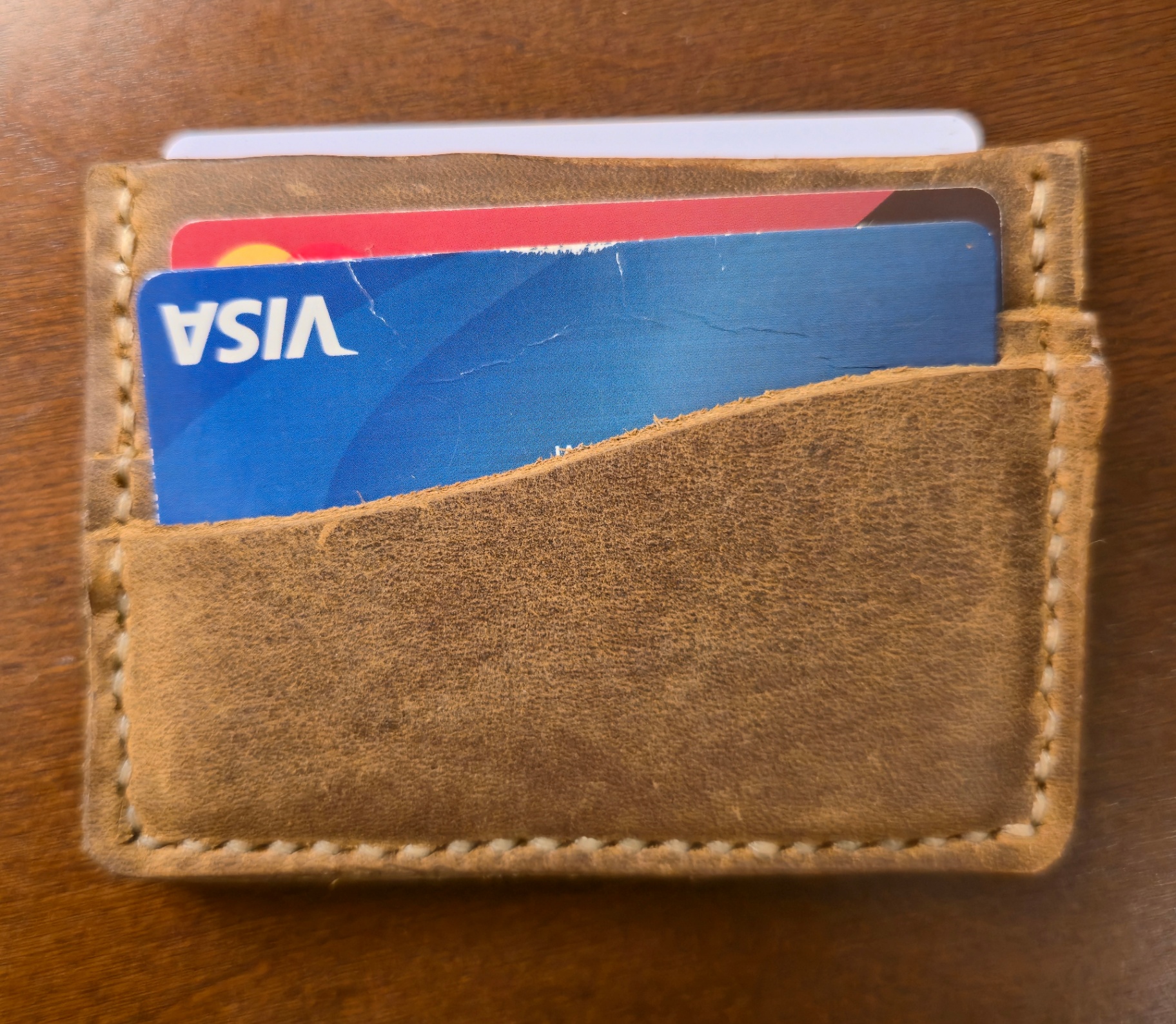
So, this April, don't let the big brands play a joke on you. Don't be fooled by "vegan" labels that are just hiding plastic, or "genuine" stamps that are hiding scraps. Look for the real stuff. Look for the grain, the smell, and the hand-finished edges.
If you ever have questions about the materials I use or how I make something, please don't hesitate to reach out on my contact page. I love talking shop and helping people understand what makes a quality piece of leather gear.
Thank you so much for taking the time to read this and for supporting my small business. It means the world to me that I get to do what I love every day. Stay honest, stay rugged, and don't take any wooden nickels (or plastic wallets) this month!
With gratitude,
Eric
The Kilted Leatherworker LLC