

Hi, I'm Eric, and if there's one question I get asked more than any other, it's this: "What's the difference between full-grain and top-grain leather, and which one is better?"
I get it. When you're shopping for handmade leather goods, whether it's a minimalist leather wallet, a sturdy belt, or a leather tote bag, the terminology can feel overwhelming. Full-grain, top-grain, genuine leather, bonded leather... it's like learning a new language.
Here's the truth: understanding the difference between full-grain and top-grain leather is one of the most important things you can learn as a buyer. It affects everything, durability, price, how your piece will age, and whether it'll last you five years or fifty.
So let's break it down in plain English. No jargon. No fluff. Just what you need to know to make a smart choice.
What Is Full-Grain Leather?
Full-grain leather is the top layer of the animal hide with nothing removed. And I mean nothing. All the natural grain, all the imperfections, all the character, it's all still there.
Think of it like this: if leather were a tree, full-grain would be the bark with all its knots, textures, and markings intact. It hasn't been sanded down or altered. What you see is what nature gave you.
When I'm working with full-grain leather in my workshop, I can see every scar, wrinkle, and variation in the hide. Some people think those are flaws. I think they're proof that the leather is real, untouched, and ready to tell a story.

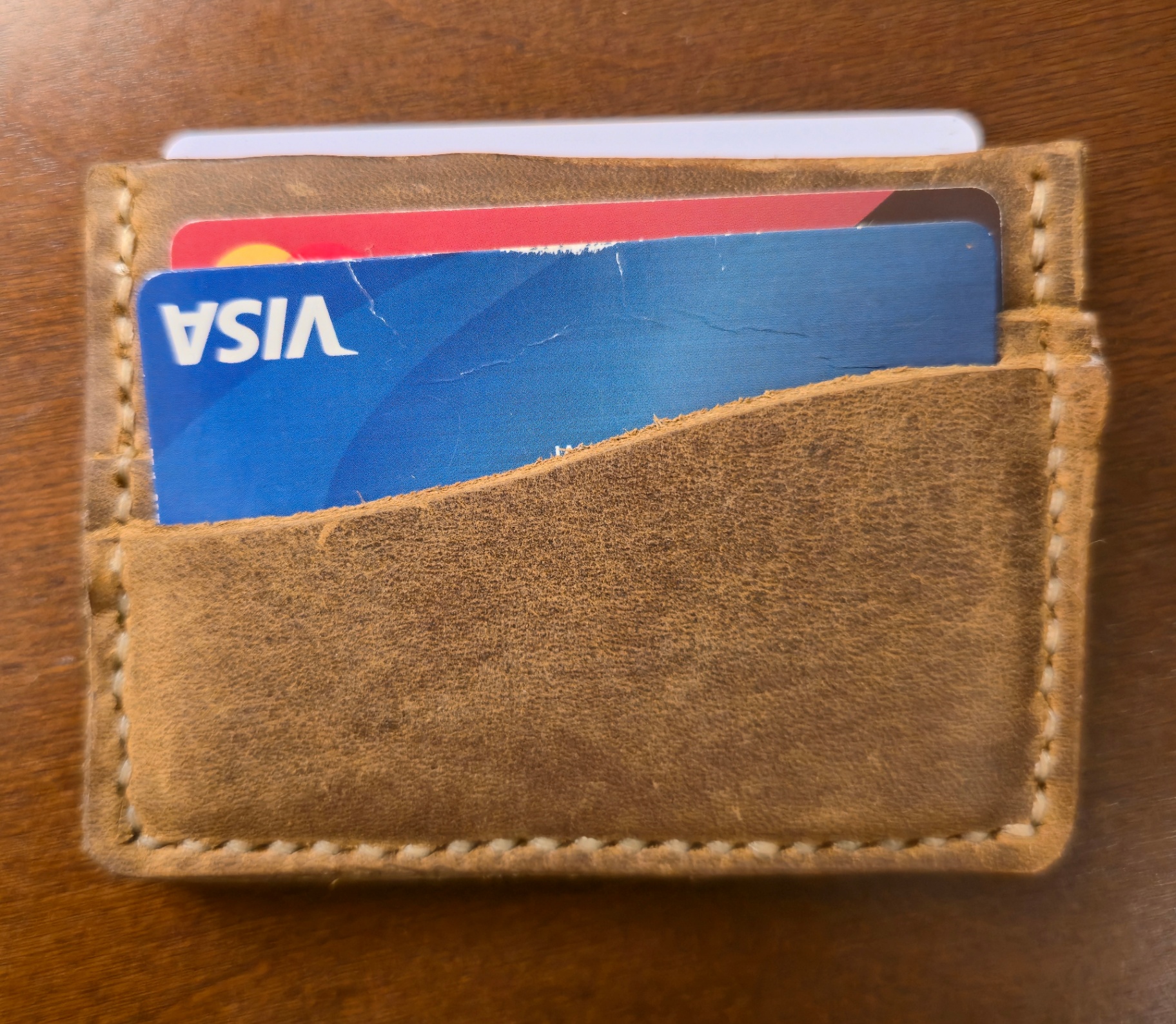
Full-grain leather is incredibly dense and durable. Because the surface hasn't been altered, the fibers are tightly packed together, making it naturally water-resistant and breathable. Over time, it develops what we call a patina, a rich, aged look that actually gets better with use. That wallet you buy today? In ten years, it'll look even better than it does now.
But here's the catch: full-grain leather is expensive. It requires high-quality hides (because every imperfection shows), skilled craftsmanship, and time. There's no hiding mistakes with full-grain. Every stitch has to be perfect.
What Is Top-Grain Leather?
Top-grain leather also comes from the top layer of the hide, but here's the difference: it's been sanded down to remove imperfections.
Imagine taking that same tree bark and smoothing it out until it's uniform and pristine. That's top-grain. The natural grain is buffed away, and often a new grain pattern is embossed onto the surface to give it a consistent look.
Why would anyone do this? Well, not every hide is perfect. Some have scars, insect bites, or inconsistent texture. By sanding the surface and applying a finish, manufacturers can use hides that wouldn't make the cut for full-grain leather. The result is a smoother, more uniform appearance.
Top-grain leather is softer to the touch right out of the gate. It doesn't need much of a break-in period, and it resists stains better thanks to that protective finish. It's also more affordable than full-grain, which makes it a popular choice for everyday items like wallets, bags, and furniture.
But, and this is important, top-grain doesn't age the same way. Because the surface has been altered, it won't develop that beautiful patina. Scratches and wear won't blend into the leather; they'll just look like damage. And while it's still durable, it won't last as long as full-grain.
The Key Differences
Let me lay it out for you in a way that's easy to digest:
Appearance: Full-grain shows all the natural character, scars, grain variations, everything. Top-grain has a smooth, uniform finish with blemishes removed.
Durability: Full-grain is the most durable leather you can buy. We're talking decades of use if you take care of it. Top-grain is hardwearing, but it won't last quite as long.
Water Resistance: Full-grain is naturally water-resistant because the surface is intact. Top-grain loses some of that protection during the sanding process.
Aging: This is where full-grain really shines. It develops a patina that hides scratches and gives it character over time. Top-grain rarely develops a patina and can show wear more obviously.
Price: Full-grain is expensive because it requires premium hides and skilled craftsmanship. Top-grain sits in the midrange, quality leather without the premium price tag.
Feel: Full-grain has a natural, sometimes rough texture that softens with use. Top-grain feels softer and more luxurious right away.
How to Tell the Difference
When you're holding a piece of leather, whether it's a minimalist leather wallet or a bag, here's how you can test it:
For full-grain, make a light scratch on the surface with your fingernail. Not a deep gouge, just a light mark. Then try to buff it out with your thumb. If it buffs out nicely and almost disappears, you're likely holding full-grain leather. The natural oils in the leather help it "heal" minor scratches.
For top-grain, press your thumb into the surface and watch what happens. If a natural crease forms and then vanishes when you release, that's a good sign. But if the leather feels slippery, overly smooth, or almost vinyl-like, you might be dealing with lower-quality leather that's been heavily processed.

I love showing people this in person because once you know what to look for, you can't unsee it. Quality leather has a weight to it, a substance. It doesn't feel flimsy or plasticky.
Which One Should You Choose?
Here's the honest answer: it depends on what you value.
If you want something that will last a lifetime, something you can pass down to your kids, go with full-grain. Yes, it costs more upfront. But when you break down the cost per year of use, it's actually the more economical choice. I've seen full-grain wallets that are thirty years old and still going strong.
Full-grain is perfect for items you use every day and want to age beautifully: belts, boots, bags, and wallets. If you love the idea of your leather goods developing character and telling a story over time, full-grain is your answer.
On the other hand, if you want something that looks pristine and polished right away, top-grain is a great option. It's still quality leather, and it's more budget-friendly. It's ideal if you prefer a uniform appearance or if you're buying something that needs to resist stains and clean easily: like a bag you'll be tossing in the car or using in messy situations.
Top-grain is also a solid choice if you don't want to deal with a break-in period. Some full-grain items can feel stiff at first and need time to soften up. Top-grain skips that phase.

What I Use at The Kilted Leatherworker
You probably guessed this already, but I work almost exclusively with full-grain leather.
When someone orders a piece from me: whether it's a handmade leather wallet, a journal cover, or a custom belt: I want to know that it's going to last. I want them to use it every single day for years and have it only get better with time. That's the kind of craftsmanship I believe in.
There's something about working with full-grain leather that just feels right to me. Every hide is different. Every piece I cut has its own personality. I love that. I love knowing that the wallet I'm stitching today will develop a patina unique to the person who carries it.
Does it take more time? Absolutely. Does it require more skill? You bet. But that's what makes it worth doing. When you're hand-stitching every seam, ensuring that every edge is finished perfectly, and taking the time to choose just the right piece of leather for each project: that's when you create something truly special.
I'll be honest: I could make more money if I switched to cheaper materials or cut corners. But that's not who I am, and it's not what The Kilted Leatherworker is about. When you buy from me, you're getting my absolute best work, made one piece at a time with materials that will outlast both of us.
The Bottom Line
Choosing between full-grain and top-grain leather comes down to your priorities.
Full-grain is the highest quality. It's durable, it ages beautifully, and it will last you a lifetime: but it costs more and requires a little patience as it breaks in.
Top-grain is excellent quality at a more accessible price point. It's soft, uniform, and stain-resistant: but it won't develop that distinctive patina or last quite as long.
Both have their place. Both are legitimate choices. The key is knowing what you're buying and making an informed decision based on what matters to you.
And if you ever have questions: whether you're shopping for a leather tote bag, a minimalist leather wallet, or anything else: just reach out. I'm always happy to talk shop and help you find the right piece for your needs.
Thanks for taking the time to learn about this with me. I hope this guide helps you make smarter choices when you're shopping for handmade leather goods.