

Hi there, I’m Eric.
If you’ve found your way to my corner of the internet, chances are you’re tired of things breaking. You’ve probably bought a belt from a big-box store that started peeling after three months, or a wallet that literally fell apart at the seams just as it was starting to get comfortable. I’ve been there too. In fact, that frustration is a big part of why I started The Kilted Leatherworker LLC.
Today, I want to talk to you about something I call "honest materials." It sounds a bit fancy, but it’s actually a very simple concept. To me, honest materials are the building blocks of everything I make. They are materials that don't try to be something they aren't. They don't hide behind plastic coatings or clever marketing terms. They are exactly what they look like: durable, natural, and built to last a lifetime.
When you invest in handmade leather goods, you aren't just buying a "product." You’re investing in a philosophy that values quality over quantity and craftsmanship over convenience.
The "Fast Fashion" Trap vs. Real Craftsmanship
We live in a world of fast fashion. Everything is designed to be replaced. You see it everywhere, labels that say "Genuine Leather" in big letters. Little did I know when I first started out, but "genuine leather" is actually one of the lowest grades of leather you can buy. It’s often just scraps of leather glued together and spray-painted to look like the good stuff.
It looks okay on the shelf, but it has no soul. It doesn’t age; it just wears out.
In my shop, I take a different approach. I focus on full-grain hides. This is the top layer of the skin, where all the strength and natural character live. When I’m sitting at my workbench, cutting into a fresh hide, I can see the story of that animal, the little marks and variations that make every piece unique. To me, those aren't flaws; they’re signatures of authenticity.

I love the preparation process. There’s something incredibly relaxing about laying out my tools and deciding how to turn a large hide into something functional that you’ll carry every day. It’s a slow process, one step at a time, ensuring that every cut is precise.
Vegetable-Tanned Cow Leather: The Gold Standard
One of my favorite materials to work with is vegetable-tanned cow leather, or "veg-tan" as we call it in the trade. If you’re looking for the ultimate example of an honest material, this is it.
Veg-tan leather is tanned using natural tannins found in tree bark and other plant matter. It’s an ancient process that takes a lot longer than the chemical tanning used in mass production, but the result is worth it. It’s stiff at first, but over time, it softens and develops a "patina."
If you’ve never heard that word, a patina is the beautiful sheen and darkening that happens as the leather absorbs the oils from your hands and exposure to the world. It’s like the leather is keeping a record of your adventures.

Take a look at a piece like this veg-tan clutch. When it’s brand new, it’s a beautiful natural tan. But five years from now? It will be a deep, rich mahogany color, and it will be even stronger than the day I made it. That’s the magic of honest materials. They don’t get worse with age; they get better. If you’re curious about how to keep your gear in top shape, check out my post on 7 mistakes you’re making with handmade leather goods.
The Rugged Strength of Buffalo Leather
While I use cowhide for many things, I have a real soft spot for buffalo leather. If cowhide is the reliable workhorse, buffalo is the rugged explorer.
Buffalo leather has a much more pronounced grain than cowhide. It’s thick, it’s tough, and it has an incredible texture that you can feel the moment you touch it. I find that it’s perfect for pieces that need to stand up to some serious use, like a buffalo belt pouch or sporran.

When I work with buffalo, I like to let the material speak for itself. The texture is so rich that you don't need much to make it look good. As you can see in the pouch above, the grain adds a depth that you just can't get from processed, machine-made materials. It’s sturdy enough to hold its shape but flexible enough to be comfortable on your hip all day.
Why Hand-Stitching Matters
You might wonder why I bother stitching everything by hand when I could just use a sewing machine. It’s a fair question! The answer comes down to durability.
Most machine-sewn items use a "lockstitch." If one thread breaks, the whole seam can start to unravel. I use a "saddle stitch," which involves two needles and a single piece of thread passing through each hole from both sides. If one thread happens to break (which is rare with the heavy-duty thread I use), the other thread is still there holding everything together.
It takes a lot longer. My fingers definitely feel it at the end of a long day. But there is a deep satisfaction in knowing that the seam I just finished is likely going to outlast me. I want you to feel confident that when you buy a minimalist wallet or a belt from me, you’re getting something that won't let you down.

I really enjoy making belts like this one. A belt is such a simple tool, but when it’s made with thick, hand-dyed leather and a solid buckle, it becomes an heirloom. It’s a piece of gear you don’t have to think about because you know it’s just going to work, day in and day out.
How to Spot Honest Quality Yourself
I want you to be an informed buyer, whether you’re shopping with me or someone else. Here are a few things I always look for when I’m checking out leatherwork:
- The Smell: This is the easiest one. Real, honestly tanned leather smells like... well, leather. It’s an earthy, rich scent. If it smells like chemicals, plastic, or spray paint, walk away.
- The Edges: Look at the edges of the item. Are they raw and fuzzy, or are they smooth and finished? I spend a lot of time "burnishing" my edges: friction-sealing them so they are smooth and won't fray. It’s a small detail, but it shows the maker cared about the longevity of the piece.
- The Feel: Real leather should feel warm. Synthetic materials often feel cold and "plastic-y." When you press your thumb into a piece of full-grain leather, you should see tiny wrinkles form around the pressure point. That’s the natural grain doing its job.
- The Hardware: I use solid brass or high-quality metal hardware. If the "metal" feels light or like it’s just plated plastic, it’s going to break. Honest materials mean honest hardware, too.
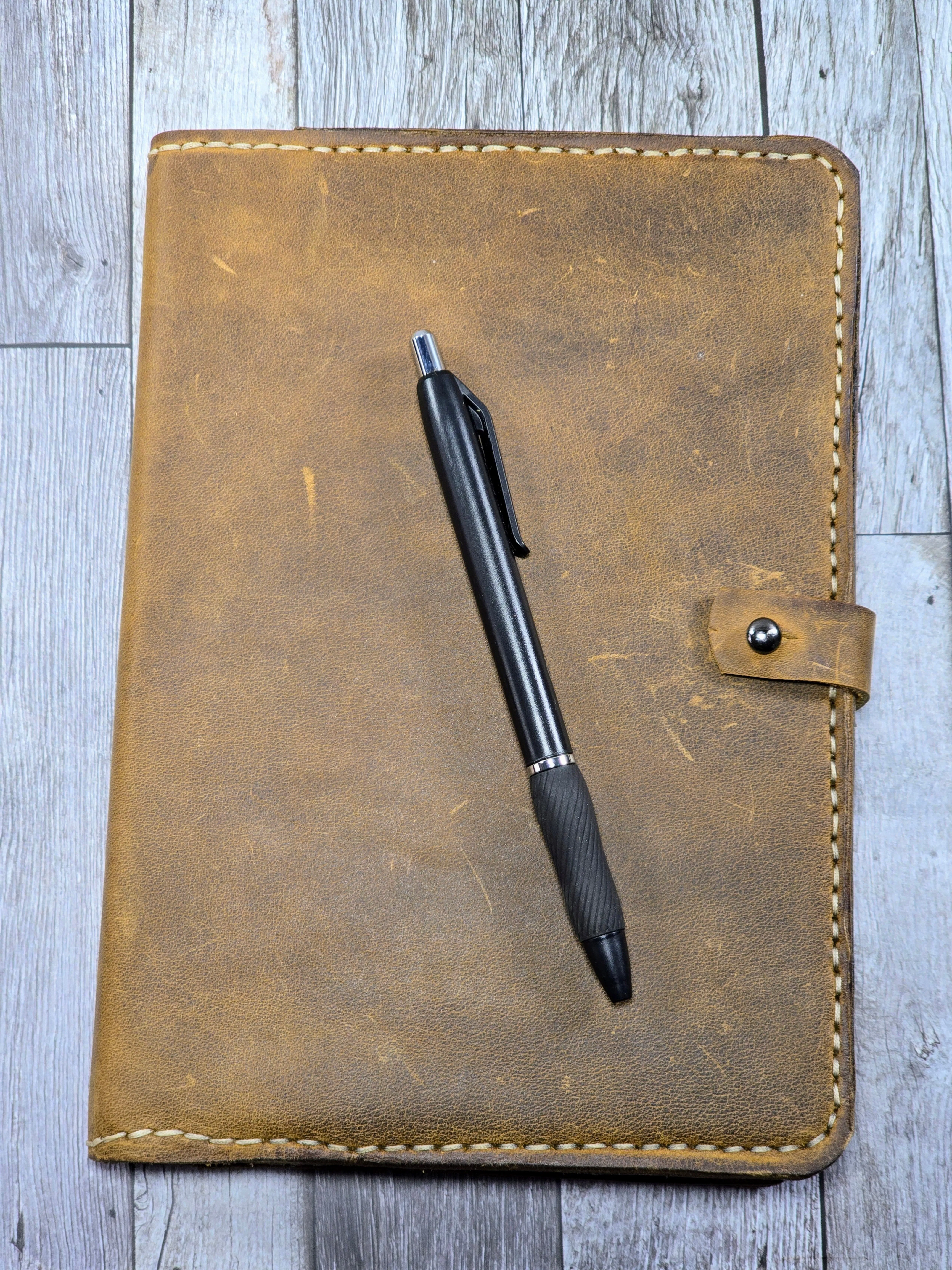
I love seeing how people use their leather journal covers. A journal cover is a great way to see honest materials in action. Over months of being tossed in bags and held during coffee shop brainstorming sessions, the leather starts to tell your story. It picks up scratches and scuffs, and instead of looking "beat up," it just looks better.
A Final Thought from the Shop
At the end of the day, I’m just a guy who loves making things with his hands. There is a certain kind of peace that comes from working with materials that have been used by humans for thousands of years. When I sit down at my bench, I feel a connection to all the leatherworkers who came before me, using the same types of hides and the same basic tools.
I’m incredibly grateful that I get to share this passion with you. When you choose a handmade item, you’re supporting a small business, sure, but you’re also choosing to step away from the "disposable" culture we’ve grown so used to. You’re choosing something that has a soul.
Thank you for taking the time to read a bit about what goes on in my head while I’m working. It means a lot to me that you care about the "why" behind the "what." If you ever have questions about a specific type of leather or how I make something, don't be a stranger: reach out and ask!
Warmly,
Eric
Founder and Owner, The Kilted Leatherworker LLC