

Hi, I’m Eric. If you’ve been browsing for a new bag, a journal cover, or a wallet lately, you’ve probably run into the term "vegan leather" more times than you can count. It sounds great, doesn't it? It sounds green, ethical, and modern. But as someone who spends his days surrounded by the earthy scent of buffalo leather and the rhythmic sound of a needle piercing through a thick hide, I think it’s time we had an honest, one-on-one chat about what that term actually means for the planet and for your pocketbook.
When I started The Kilted Leatherworker LLC, my goal was simple: I wanted to make things that lasted. I wanted to create gear that didn't just survive a season but became a part of your life's story. In a world that feels increasingly disposable, as refreshing as a cold grape soda on a hot Texas afternoon, I wanted to offer something permanent.
Today, I want to peel back the layers on the "handmade leather vs. vegan leather" debate. We’re going to talk about sustainability, longevity, and why your choice in gear matters more than you might think.
What Exactly is "Vegan Leather"?
Let’s get the big question out of the way first: What is "vegan leather" actually made of?
Most of the time, when you see a mass-produced "vegan leather" item at a big-box store, you’re looking at plastic. Specifically, it’s usually Polyurethane (PU) or Polyvinyl Chloride (PVC). Essentially, it’s a fabric base coated with a plastic polymer to give it a texture that looks, at least from a distance, like the real thing.
Now, I’m all for innovation, but there’s a bit of a trick being played here. Calling plastic "leather" is a clever marketing move, but it doesn't change the fact that these materials are petroleum-based. They require significant chemical processing to create, and here’s the kicker: they don’t breathe, they don’t age well, and they certainly don't last.
The Longevity Factor: Why Real Leather Wins
I’ve always believed that the most sustainable product is the one you only have to buy once. This is where handmade leather goods truly shine.
Think about a minimalist leather wallet. If you buy a plastic-based "vegan" version, it might look sharp for six months. But eventually, the plastic starts to crack. The edges peel. The structural integrity fails because plastic simply isn't designed to flex and heal the way a natural hide does. Within a year or two, that wallet is in a landfill, and you’re back at the store buying a replacement.
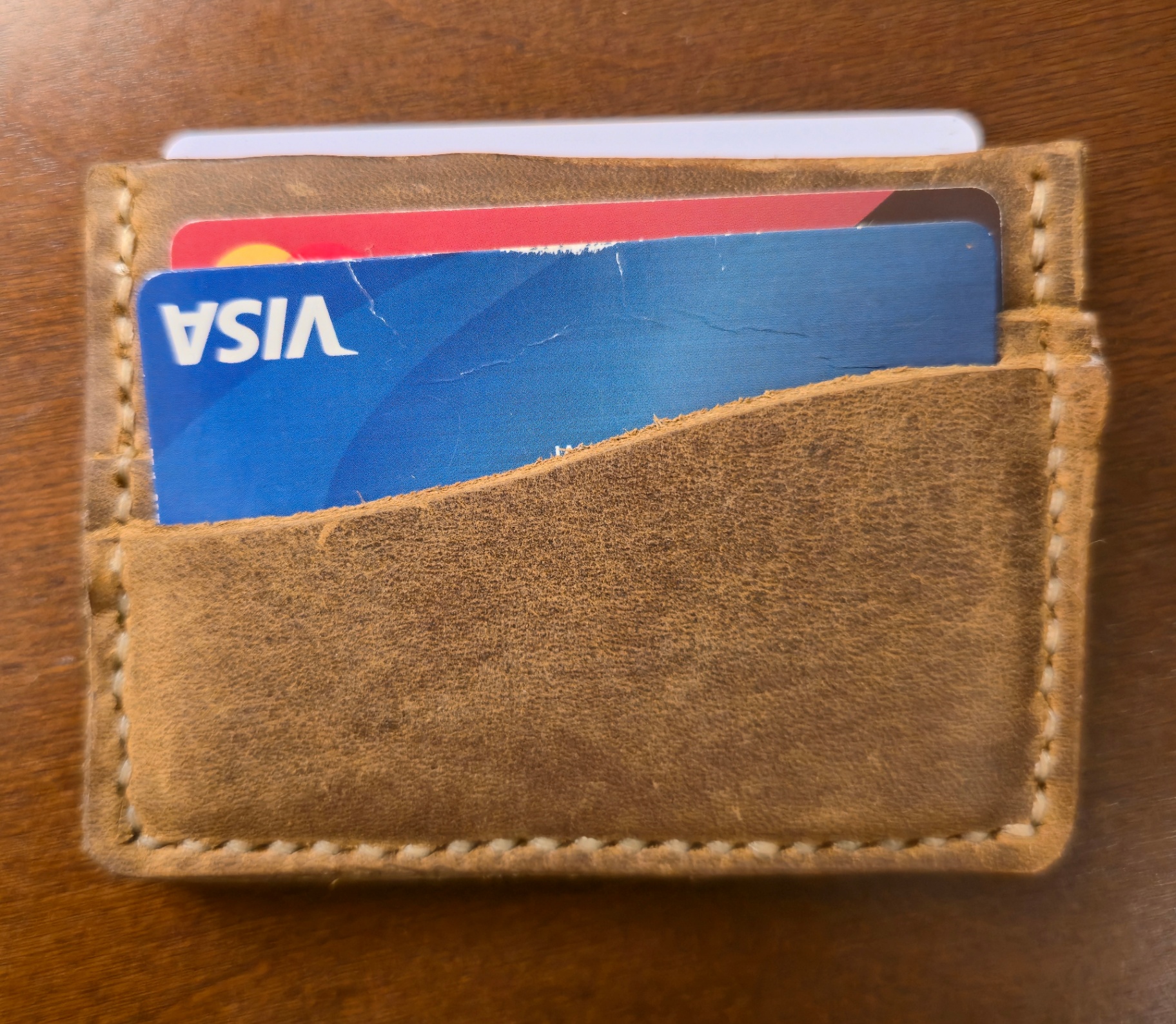
When I craft a minimalist leather wallet, I’m using genuine hide that has lived a life. It’s tough. It’s resilient. Instead of cracking, it develops a patina, a unique sheen and character that only comes with time and use. It actually gets better the more you carry it. I’ve seen leather wallets passed down from grandfathers to grandsons. You just can’t do that with a piece of PVC.
Is Real Leather Sustainable?
This is a point where I like to be very honest with my customers. The production of any material has an environmental footprint. Livestock requires land and water. However, there is a crucial piece of the puzzle that often gets left out of the conversation: real leather is a byproduct of the food industry.
If we didn't use the hides of these animals to create durable goods like The Highland Nomad (my signature belt pouch), those hides would largely become waste. By tanning them and turning them into gear that lasts 40 or 50 years, we are honoring the animal and preventing a massive amount of waste from entering the environment.
Furthermore, real leather is biodegradable. It takes a long time, sure, but it eventually returns to the earth. A plastic "vegan" bag will sit in a landfill for hundreds of years, breaking down into microplastics that eventually find their way into our water systems.
Materials with Integrity: Why I Use Buffalo Leather
In my shop, I’m very picky about what I work with. I love using buffalo leather because it has an incredible grain and a strength that is hard to match. It’s honest material. When you hold something like The Wayfarer’s Tote | Hand-Stitched Leather Carry-all, you can feel the density and the quality.

Using these genuine hides means I don't have to use a bunch of synthetic stiffeners or chemical glues to make the product feel "premium." The material does the talking. I also try to keep my process as "clean" as possible. Because I work by hand, I'm not running massive machinery that gulps electricity. It’s just me, my tools, and the leather.

The "Buy Once, Cry Once" Philosophy
There’s an old saying in the craft world: "Buy once, cry once." It means that while a high-quality, handmade item might cost more upfront than a mass-produced plastic alternative, you only have to pay that price once.
When you invest in something like The Chronicler’s Cover | Burgundy Leather Journal Sleeve, you aren't just buying a cover; you're buying a companion for your thoughts that will last through dozens of filled notebooks. If you bought a "vegan" cover, you'd likely be replacing it every few years as the "leather" started to flake off onto your desk.
I’m a firm believer that reducing our consumption is the best thing we can do for the planet. Instead of buying ten cheap things that break, buy one good thing that lasts. That’s the heart of what I do at The Kilted Leatherworker.
Crafting with Intention
Every time I sit down to work on a custom order, I think about the person who is going to use it. I think about where that item will go, maybe on a hike with The Highland Nomad strapped to their belt, or into a high-stakes meeting with a hand-stitched padfolio.

Because I make everything one step at a time, I can ensure that every stitch is placed with purpose. I use heavy-duty thread and techniques that machines simply can't replicate. If a stitch in a machine-sewn "vegan" bag pops, the whole seam usually starts to unravel. In my shop, I use a saddle stitch, which means even if one thread were to break (which is rare!), the rest of the seam stays locked tight.
The Highland Nomad: A Case Study in Durability
Let's look at one of my favorite pieces to make: The Highland Nomad. This is a buffalo leather belt pouch/sporran that is built for adventure.

If you were to take a "vegan leather" pouch out into the woods, through the rain, and brush it against thorns and rocks, it would look pretty beat up pretty quickly. The plastic coating would scratch and peel, revealing the fabric underneath.
But The Highland Nomad? It thrives in those conditions. A little rain? Just wipe it off and let it dry naturally. A scratch? Most of the time, you can rub it out with your thumb, or it just adds to the "adventure scars" of the piece. It’s gear that is actually designed to be used, not just looked at.
Making the Choice for Yourself
Look, I get it. We all want to make choices that align with our values. If your primary goal is to avoid animal products entirely, then a plant-based (not plastic-based!) vegan alternative might be your path. But if your goal is sustainability, reducing waste, and owning gear that actually performs, I truly believe handmade leather is the way to go.
When you choose a handmade leather item, you are:
- Supporting a small business and a real person (hi again!).
- Investing in a material that is a natural byproduct of the food industry.
- Reducing landfill waste by choosing an item that lasts a lifetime.
- Avoiding the microplastic pollution associated with synthetic "leathers."
Final Thoughts from the Workshop
I love what I do. There is something truly special about taking a raw hide and turning it into something functional, beautiful, and permanent. I’m grateful every day that I get to share these pieces with you.
Whether you’re looking for a new wallet, a sturdy bag, or a cover for your daily journal, I encourage you to look past the marketing buzzwords. Think about the long game. Think about what that item will look like in five, ten, or twenty years.
If you have any questions about the leathers I use or want to chat about a custom project, please don’t hesitate to reach out. I’m always happy to talk shop!
Thank you for supporting small-scale craftsmanship and for caring about where your gear comes from. It means the world to me.
Warmly,
Eric
Founder & Owner, The Kilted Leatherworker LLC