

I've lost count of how many wallets I've owned over the years. Most of them lasted maybe two or three years before the stitching gave out, the leather started cracking, or they just lost their shape entirely. It's frustrating, isn't it? You spend good money on something you use every single day, and it falls apart before you know it.
That's why I'm so particular about the wallets I make now. I want them to last a decade or longer: not just survive, but actually get better with age. If you're tired of replacing your wallet every couple of years, I'm going to share exactly what to look for.
Why Most Wallets Don't Last
Here's the truth: most wallets fail because they're made with cheap materials and shortcuts in construction. Companies use corrected grain leather (which is sanded down and covered with a finish) or bonded leather (which is basically leather scraps glued together). These materials look fine at first, but they don't have the structural integrity to handle daily wear.
The stitching is usually the first thing to go. I've seen wallets where the thread is so thin it snaps after a few months in your pocket. And don't even get me started on wallets that stretch out after you put more than two cards in them.
If you want a wallet that lasts, you need to focus on three things: the leather quality, the construction, and how it ages.
Full-Grain Leather Is Non-Negotiable (Yep, I’m That Guy)
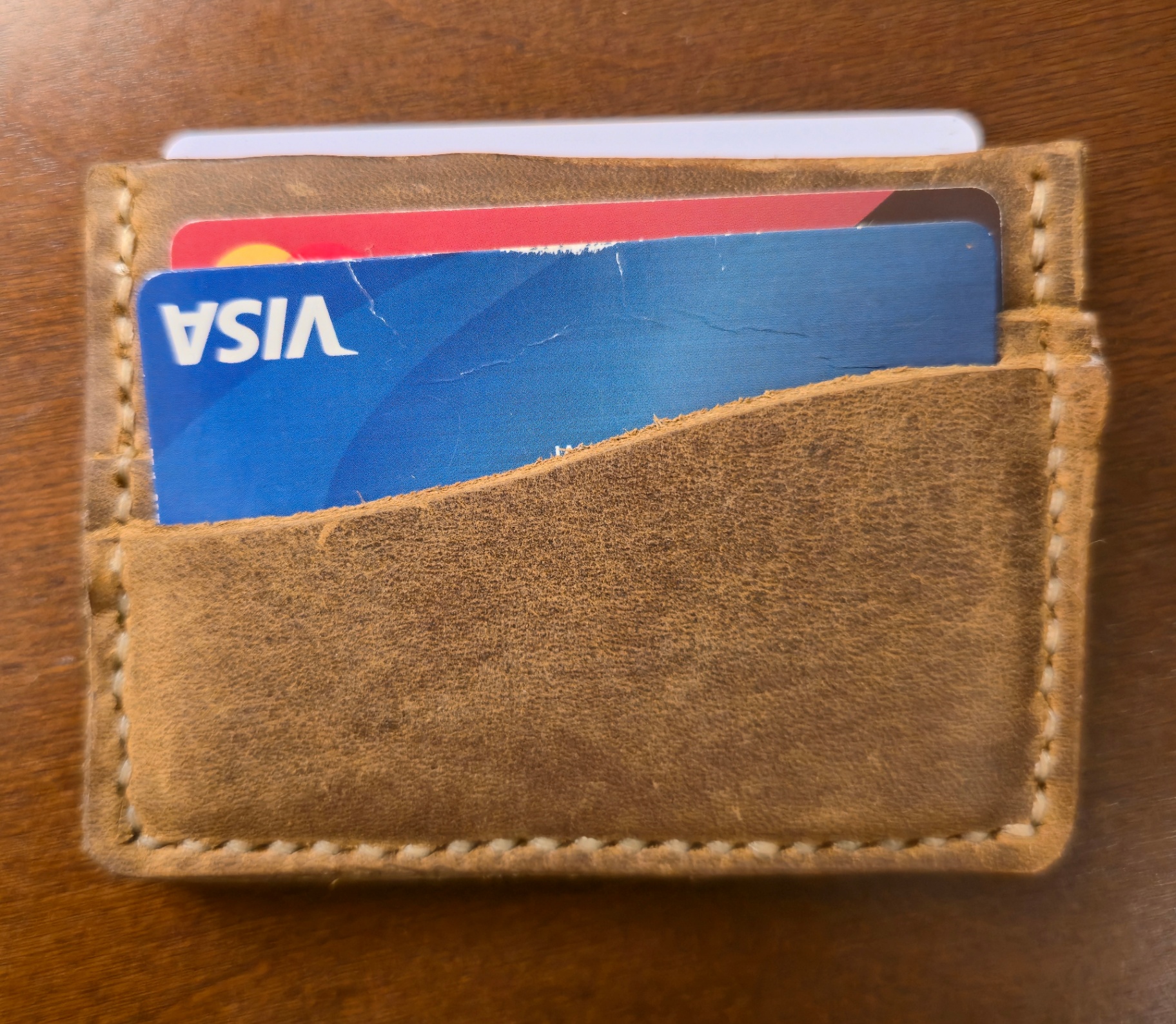
When I'm choosing leather for a wallet, I only use full-grain leather. This is the top layer of the hide with all the natural grain intact. Nothing has been sanded off or corrected. It's the strongest, most durable type of leather you can get.
Full-grain leather has tight, dense fibers that resist tearing and wear. It breathes, so it won't trap moisture against your cards. And here's the best part: it develops a patina over time. That means instead of looking worn out after a few years, it actually looks better. The leather darkens where you handle it most, creating this beautiful, unique finish that tells the story of how you use it.
Top-grain leather is a close second. It's had a very thin layer removed and been lightly finished, but it's still high quality and will last for years. What you want to avoid is anything labeled as "genuine leather" (which is a catch-all term for lower grades) or bonded leather.
When you're shopping, ask specifically what grade of leather is used. If the seller can't or won't tell you, that's a red flag.
Quality Stitching Makes All the Difference
I hand-stitch every wallet I make. It takes longer than using a machine, but there's a reason I do it this way. Hand-stitching uses a saddle stitch technique where two needles work from opposite directions through the same holes. If one stitch breaks, the others hold. With machine stitching, one break can unravel the entire seam.
Look for wallets with visible, even stitching. The thread should be thick and durable: I use waxed thread that's designed specifically for leatherwork. The stitch spacing should be consistent, and the tension should be tight.

You should also check the edges. Are they finished cleanly? Are the corners reinforced? These details matter because corners and edges are stress points that take the most abuse in your pocket.
How It's Designed Matters
A wallet can have the best hide and stitching in the world, but if the design is flawed, it won't last. I learned this the hard way early on.
For a minimalist leather wallet, you want a design that distributes stress evenly. All-hide card sleeves will stretch over time if you're constantly removing and inserting cards. That's why I reinforce high-stress areas and think carefully about how the wallet opens and closes.
The thickness matters too. A truly minimalist leather wallet should be slim enough to carry comfortably in your front pocket, but not so thin that the hide can't handle the daily flexing. I aim for a sweet spot where the hide has enough substance to be durable but doesn't add unnecessary bulk.
Card retention is another big one. Your handmade leather wallet should hold your cards securely without being so tight that you have to pry them out. This requires precise cutting and assembly: getting the dimensions just right so the wallet works smoothly from day one and continues to work well as the hide breaks in.
The Beauty of Patina
One of my favorite things about full-grain leather is watching how it changes over time. When I hand you a new wallet, it's beautiful in its own right: the leather is smooth, the color is rich, and everything is crisp and new. But give it a year or two, and it transforms into something even better.
The oils from your hands, the pressure from sitting, the natural exposure to light: all of these things work together to create a patina. The leather darkens gradually, developing this warm, burnished look. High-touch areas like the corners and the exterior develop character marks. Every scratch and scuff tells a story.
This is something you only get with quality leather. Cheap leather or synthetic materials don't age gracefully. They crack, peel, and fall apart. Full-grain leather actually becomes more supple and beautiful the more you use it.
What to Look for When You're Shopping
Let me give you a practical checklist for evaluating any minimalist leather wallet:
Check the leather grade. Ask specifically if it's full-grain or top-grain. If they use vague terms or can't answer, move on.
Examine the stitching. Look for hand-stitching if possible, or at least high-quality machine stitching with thick thread. Make sure it's reinforced at stress points.
Test the construction. Does it feel solid? Are the edges finished? Do the cards slide in and out smoothly without being loose?
Consider the design. Will this wallet work with how you actually carry your cards and cash? Is it truly minimal, or is it trying to do too much?
Ask about the maker. Who's behind the product? Do they stand behind their work? A maker who cares about their craft will be happy to talk about materials and methods.
Our Minimalist Wallet
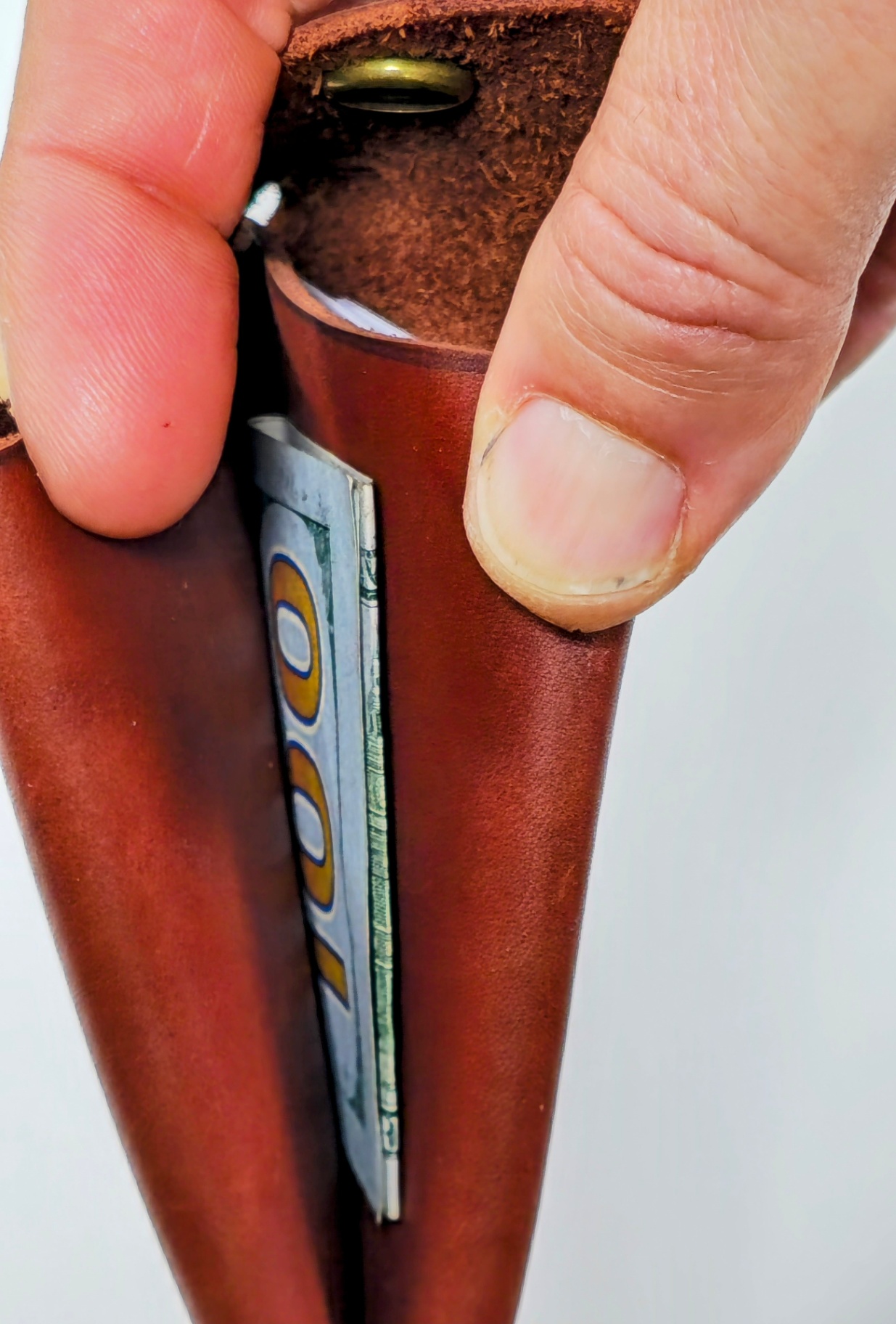
I make a minimalist leather wallet that checks all these boxes—specifically our Burgundy Wrinkle Minimalist Wallet when you want something slim, tough, and good-looking without screaming for attention. It’s cut from full-grain hide that I hand-select for each piece. Every one is hand-stitched with waxed thread, and I finish the edges carefully to prevent fraying (because nothing kills the vibe like a wallet that looks tired before you do).
The design holds four to five cards comfortably, plus some folded cash. It's slim enough for your front pocket but substantial enough to last. As it ages, it develops a gorgeous patina that makes each handmade leather wallet unique to its owner.
I make them in different color combinations too: I love working with natural tans, rich burgundies, and even two-tone designs that add a bit of visual interest while staying minimal. If you’re curious, take a peek at the Burgundy Wrinkle Minimalist Wallet—it’s a solid example of what I mean when I say “minimalist leather wallet,” without the flimsy “minimalist” part.
What I love most about making these wallets is knowing they're going to be with someone for years. You're not buying something disposable. You're investing in a handmade leather wallet that will get better with time and become part of your daily routine.
The Long View
Choosing a wallet that will last 10+ years requires you to think differently about what you're buying. You're not looking for the cheapest option or even the trendiest one. You're looking for quality materials, solid construction, and thoughtful design.
When you find the right wallet, it stops being just another thing you own. It becomes a tool you trust, something that fits into your life so naturally you barely think about it. And years from now, when you pull it out of your pocket and see how it's aged and changed with you, you'll understand why quality matters.
That's what I'm after every time I sit down at my workbench to make a new wallet. I want to create something that lasts, something that gets better with time, and something that you'll actually want to keep using year after year.
Thanks for taking the time to read this. If you have questions about choosing the right wallet or want to know more about how I make them, feel free to reach out. I'm always happy to talk leather.