

Hi, I'm Eric, the founder and owner of The Kilted Leatherworker LLC. If you’re anything like me, you probably have a bit of a "thing" for notebooks. There is just something about a fresh page and a solid pen that makes you want to get out there and start something new. But, as I learned pretty early on in my journey, the notebook is only half the battle. If you’re carrying your thoughts into the woods, onto a job site, or just tossing them into a backpack every day, a paper cover isn't going to cut it.
I spent years buying those mass-produced "leather" journals from big-box stores. You know the ones, they look great under the bright fluorescent lights of the mall, but after three weeks in a pocket, they start peeling like a bad sunburn. It was frustrating. I wanted something that felt real, something that smelled like a workshop, and something that would actually get better the more I used it.
That’s why I started making my own. Today, I want to walk you through how to choose a leather journal cover that will actually last a lifetime, specifically looking at why our signature burgundy covers stand a world apart from the stuff you find on the mass market.
The Mystery of "Genuine Leather"
One of the biggest hurdles you’ll face when looking for a cover is the marketing jargon. Little did I know when I first started out, but "Genuine Leather" is actually a bit of a trick. In the industry, it’s often one of the lowest grades of leather you can buy. It’s usually made by taking the leftover scraps of hide, gluing them together, and stamping a fake grain on top.
When you buy a mass-produced journal cover, that’s usually what you’re getting. It feels a bit like plastic because, well, it’s covered in a heavy plastic coating to make it look uniform.
At The Kilted Leatherworker LLC, I take a different approach. I believe in honest materials. That means I use full-grain hides and calfskin. Full-grain is the top layer of the hide: the toughest, most durable part. It hasn't been sanded down or "corrected" to remove imperfections. If the cow got a scratch from a briar patch, you might see a hint of that. I love that. It means every single piece I cut is unique.
Why I’m Obsessed with Our Signature Burgundy
There is something about the color burgundy that just feels timeless. When I was developing our Burgundy Leather Journal Cover, I wanted a shade that felt sophisticated but wasn't afraid to get dirty.
Our signature burgundy leather has a "pull-up" quality. If you aren't familiar with that term, it basically means the leather is packed with oils and waxes. When you fold it or scratch it, those oils move around, creating beautiful light and dark tones. It makes the cover look alive.
When you compare this to a mass-produced cover, the difference is immediate. A mass-produced cover is one flat, boring color. It stays that way until the paint starts to chip. But our burgundy leather? It develops a story. Every time you pull it out of your bag, it looks a little different, a little more "yours."

The Secret is in the Stitching
I enjoy the process of assembly just as much as the design phase. One of the biggest tells of a low-quality, mass-produced cover is the stitching. If you look closely at a store-bought cover, the thread is usually very thin, almost like what you’d find on a dress shirt. It’s done by high-speed machines that can pump out thousands of units an hour. If one stitch breaks, the whole thing can start to unravel.
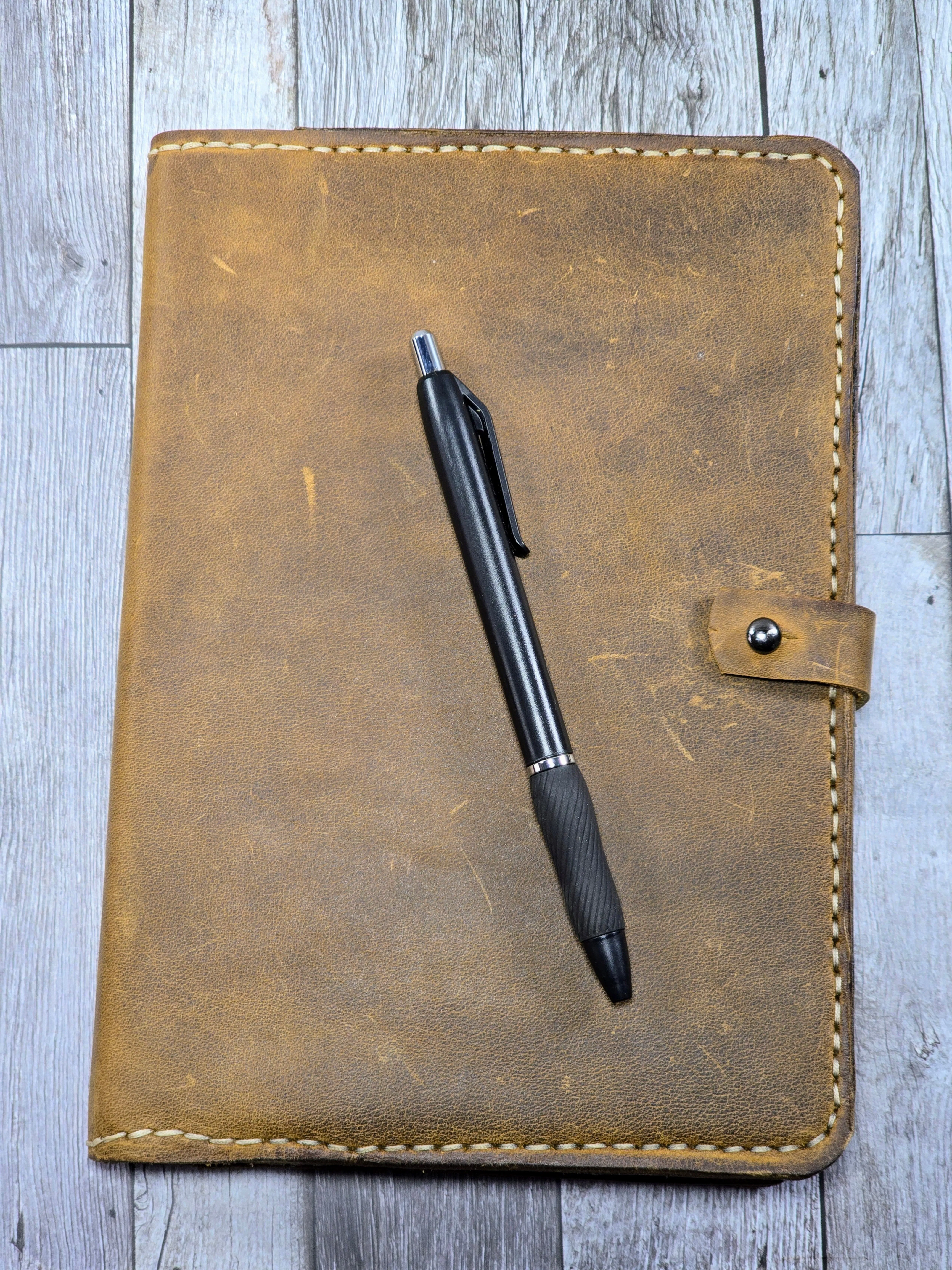
I prefer to take things one step at a time. I use heavy-duty, waxed thread and ensuring that every stitch is perfect is a point of pride for me. Whether it’s on our handcrafted leather journal cover or a smaller accessory, that stitching acts as a backbone. It’s designed to hold up to the tension of being stuffed into a pocket or opened and closed hundreds of times.
Functionality: The 3-Pen Loop Design
As you may have guessed, I’m a bit of a stickler for utility. A journal cover shouldn't just be a pretty face; it needs to solve a problem. One problem I always had with standard covers was how to keep them closed without using a bulky strap or a snap that might break.
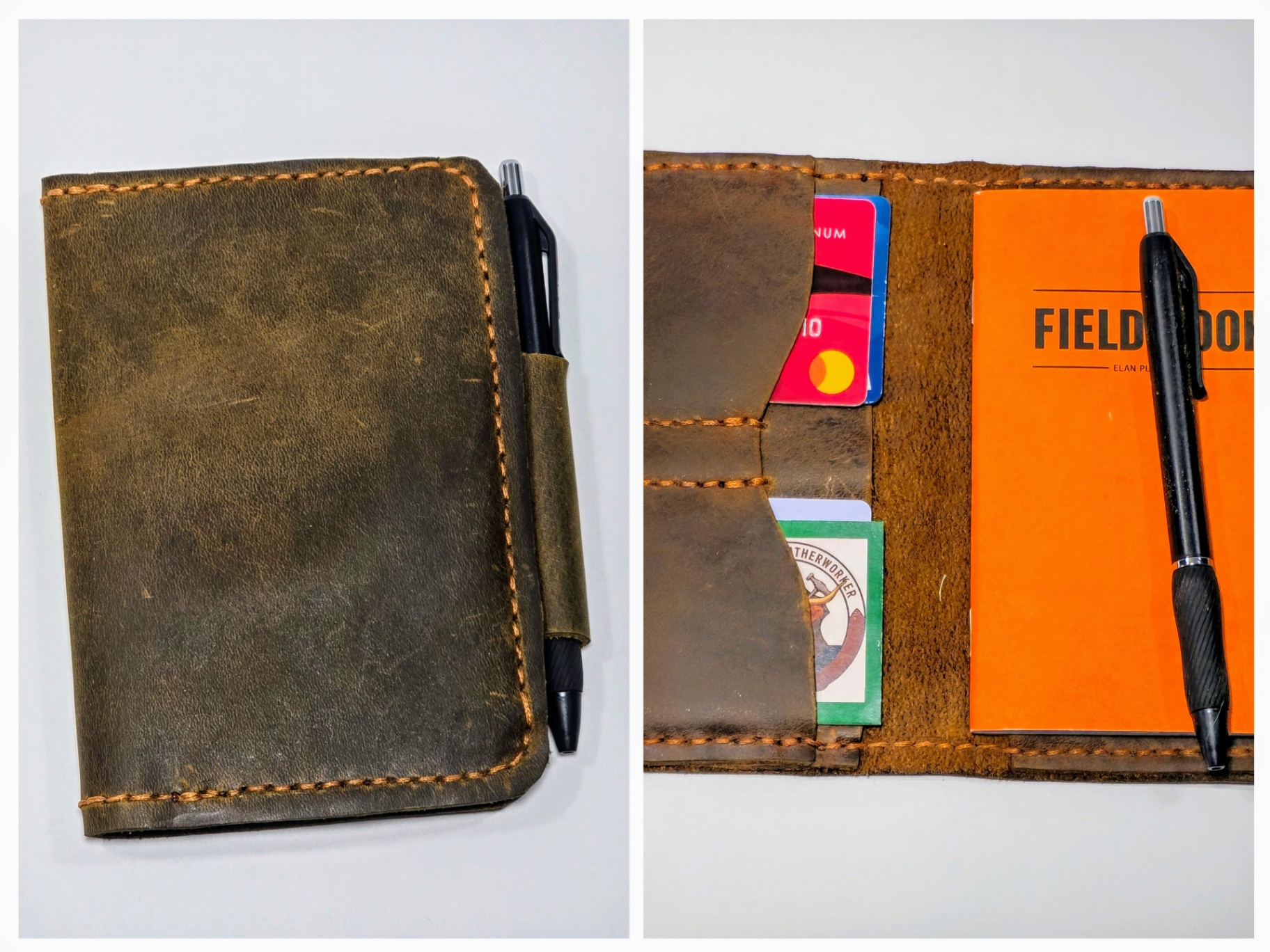
That’s where the Three Pen Loop Secure Mini Journal Cover comes in. I built this with three loops: two on the back and one on the front. When you slide your pen through all three, it acts as a deadbolt, locking the journal shut. It keeps your notes secure and, most importantly, it means you always have a pen ready to go. No more digging around the bottom of your bag for a stray ballpoint.

Sizing for Your Adventure
How do you choose the right size? It really depends on where you’re going.
- The Standard Cover: This is for the heavy lifters. If you’re a long-form writer, a poet, or someone who likes to sketch, the larger Handcrafted Leather Journal Cover is your best bet. It provides a solid "desk" feel even when you’re sitting on a log in the middle of nowhere.
- The Mini Cover: I have an addiction to Field Notes-sized notebooks (3.5" x 5.5"). They are just so portable. Our Mini Leather Journal Cover is designed for the person who wants to stay light on their feet. It fits perfectly in a back pocket or a jacket pocket.
I’ve found that the mini size is perfect for "adventure-ready" kits. It’s what I carry when I’m out at market days or checking on supplies.
The "Feel" Factor
There’s an emotional side to this, too. When you hold a mass-produced journal, it feels like a commodity. It’s something you use and eventually throw away. But when you hold a piece of thick, full-grain hide, you can feel the weight of the craftsmanship. It feels substantial.

I often tell people that my goal is to make gear that your grandkids will fight over. That sounds a bit dramatic, I know, but it’s the truth! Leather is one of the few materials that actually improves with age. While plastic and "genuine leather" degrade, full-grain calfskin or buffalo hide develops a patina. It gets shinier, softer, and more molded to your specific way of carrying it. It becomes a record of where you’ve been.
Adventure-Ready Philosophy
Everything we do at The Kilted Leatherworker LLC is built around the idea of being "adventure-ready." Whether you are heading to a board meeting or hiking the Appalachian Trail, your gear shouldn't be the thing you’re worried about.
I want you to be able to toss your journal into a Buffalo Belt Pouch or a Rustic Tote and know it’s protected. Our covers are thick enough to prevent the corners of your notebook from fraying, and the natural oils in the leather provide a level of water resistance that synthetic covers just can't match.
Making it a Set
I’ve noticed that many of my customers like to coordinate their gear. If you’re a fan of that rich burgundy look, I actually use the same leather for some of our other accessories. For example, the Burgundy Wrinkle Minimalist Wallet is a perfect companion to the journal cover. It’s a great way to keep your EDC (Every Day Carry) looking sharp and consistent.
Final Thoughts on Choosing Your Cover
When you’re looking to buy your next cover, ask yourself three questions:
- What is the leather grade? If it doesn't say "full-grain," it's probably not going to last.
- How is it stitched? Look for thick, visible thread that shows a human hand was involved.
- Will it age well? Ask about the patina.
I’m incredibly grateful that I get to spend my days in the shop, working with these materials and creating things that help people document their lives. It’s a slow process: making things one step at a time: but it’s the only way I know how to do it right.
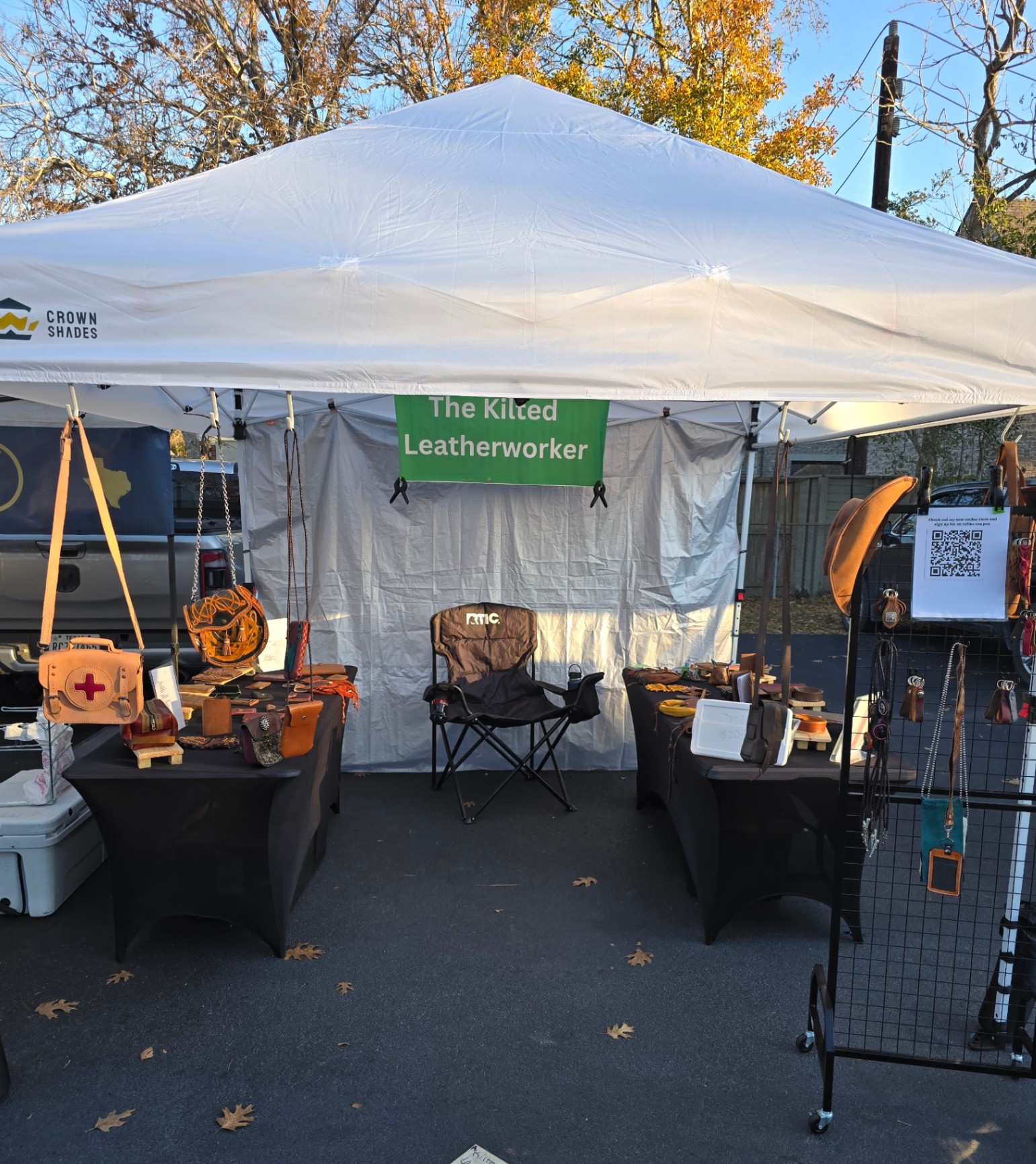
Thank you so much for taking the time to read a bit about what I do and why I do it. If you have any questions about which cover is right for your specific notebook, don't be a stranger! Drop me a line or come see me at one of our market days.
I hope your next journal is full of great ideas and even better adventures.
Warmly,
Eric Founder, The Kilted Leatherworker LLC