

Hi, I'm Eric. If you’ve spent any time browsing through our workshop here at The Kilted Leatherworker, you probably know how much I love building pieces designed to age gracefully alongside you. There is something deeply satisfying about holding a handmade leather journal cover in your hands: the rich scent of full-grain hide, the sturdy pull of hand-stitched seams, and the way the leather softens and darkens with every trip you take.
As you may have guessed, crafting the cover is only half the journey. The other half is what you put inside it.
Whenever I’m sitting at my workbench late in the afternoon, cracking open a cold, fizzy root beer and sorting through fresh notebook refills, people often ask me: “Eric, how do I actually choose the right notebook to slide into my leather journal cover?”
It’s a great question. Slide the wrong notebook in: one that's too thick, uses flimsy paper that bleeds ink everywhere, or has a awkward binding: and even the finest leather cover won't give you that seamless writing experience you're looking for. Let’s walk through everything you need to consider so you can pair your handmade cover with the ultimate notebook refill.
1. Getting the Dimensions Right: Size Matters
Before you look at paper weight or ruling styles, you need to make sure the notebook actually fits inside your leather journal cover without buckling the spine or straining the edges.
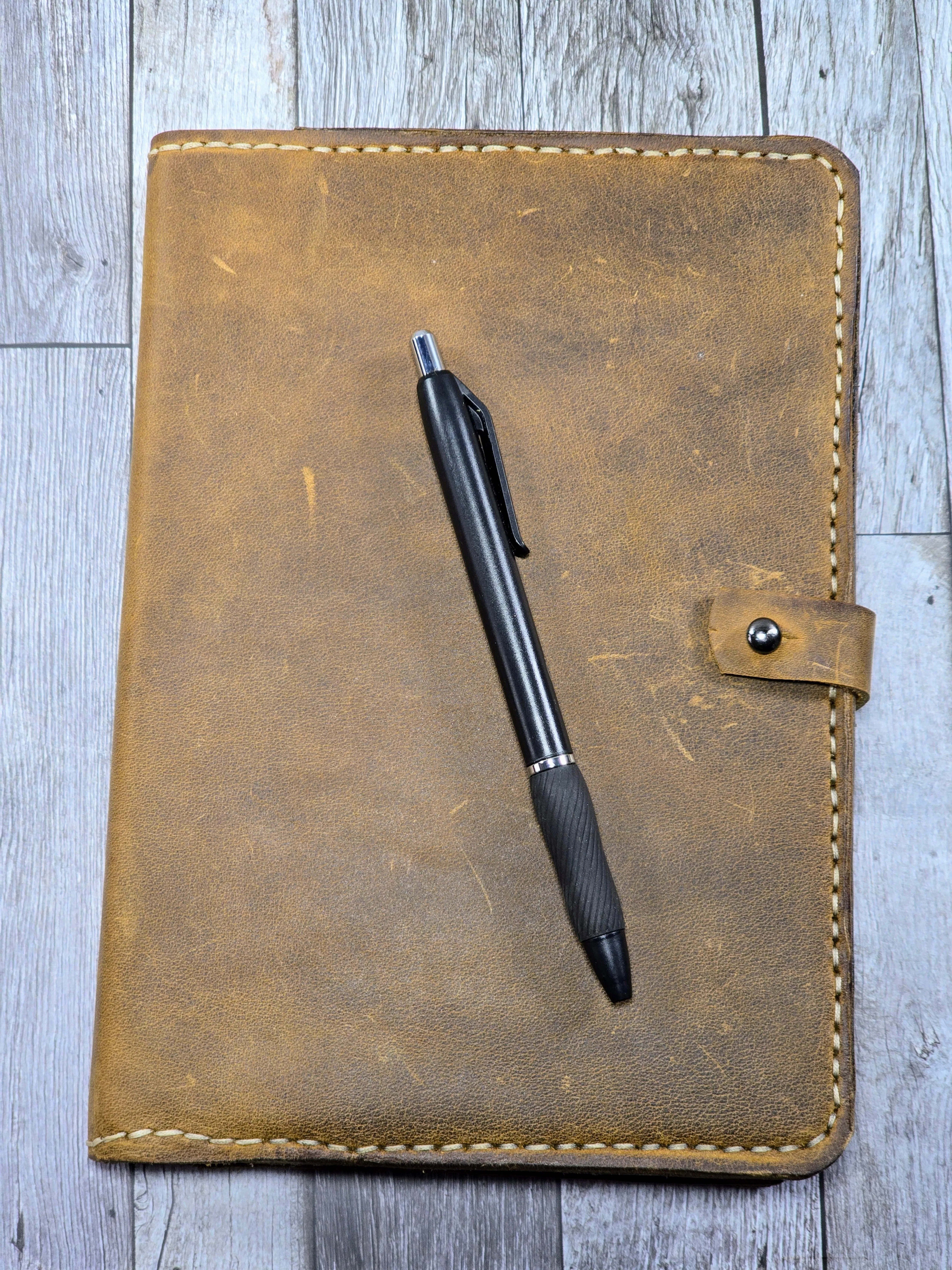
Most standard covers: including our signature The Chronicler’s Cover | Burgundy Leather Journal Sleeve and our larger statement pieces: are tailored around standard notebook dimensions like A5, A6, or standard Traveler’s sizes.
- Measure twice: Take a peek at the inner slip pockets of your cover. Check the height, width, and how much clearance you have along the spine.
- Watch the spine thickness: If you pick a chunky, 400-page notebook packed with heavy cardstock, you might find that your cover won't close comfortably.
- The Sweet Spot: For an A5 cover, a standard notebook ranging from 160 to 240 pages usually provides the ideal balance of longevity and slim profile. It fills out the leather nicely without bulging at the seams.
2. Understanding Paper Weight (GSM) and Ink Bleed
If you’re anything like me, you appreciate a pen that glides smoothly across the page. But there is nothing worse than writing a thoughtful paragraph on the front of a page, only to flip it over and see your ink bleeding right through to the back.
This is where GSM (grams per square meter) comes into play. It measures the density and thickness of the paper:
- 70–80 GSM: This is your classic everyday notebook paper. It’s lightweight, keeps the journal slim, and handles standard ballpoints and gel pens just fine.
- 90–100 GSM: If you prefer smoother gel pens, rollerballs, or mild highlighters, stepping up to a 90 or 100 GSM sheet will dramatically reduce ghosting and show-through.
- 120+ GSM & Tomoe River (~52 GSM): Fountain pen enthusiasts often look for specialized paper. Ultra-thin Tomoe River paper (~52 GSM) resists feathering despite its feather-light feel, while heavy 120 GSM stocks handle ultra-wet fountain pen nibs with ease: just remember that high GSM plus high page count equals a much thicker spine!
Think of it like balancing the carbonation and sweetness in a classic cream soda: you want all the right elements working together in harmony so nothing spills over where it shouldn't.
3. Ruling Styles: Lined, Dot Grid, Blank, or Grid
How do you plan to use your journal? Your daily habits should dictate the ruling style of your refill:
- Lined (Ruled): Perfect for traditional journal entries, creative writing, and keeping your thoughts neat and straight.
- Dot Grid: The reigning champion for bullet journaling, flexible planning, and quick sketches. The subtle dots give you just enough guidance without cluttering the page.
- Plain (Blank): Ideal if you love unhindered sketching, mind-mapping, or writing across the page without boundaries.
- Squared (Grid): Great for technical notes, architectural layouts, and crisp handwriting.
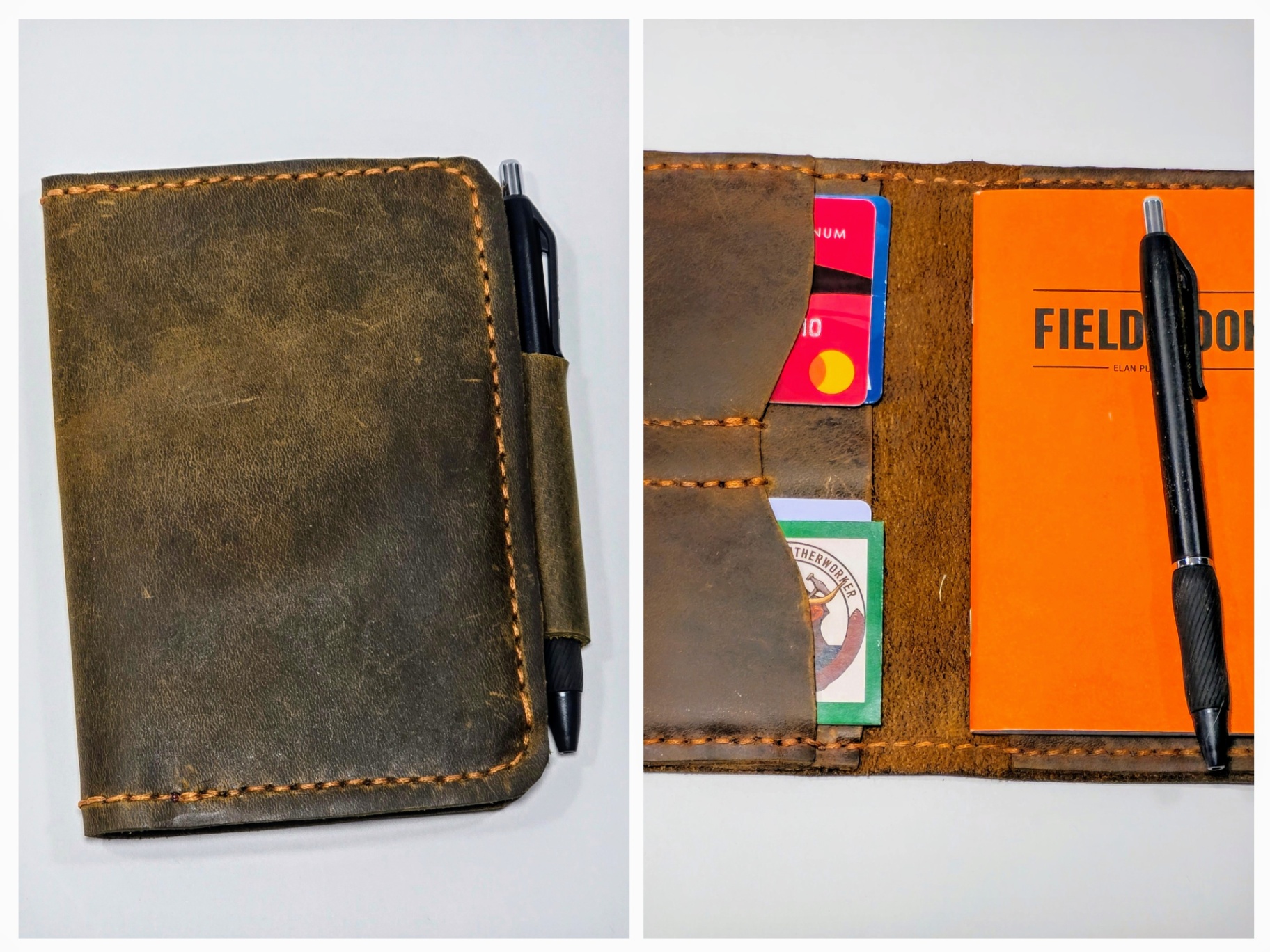
If you carry a more compact setup: like our pocket-sized notebook covers: a simple dot grid or lined refill gives you maximum versatility when you're jotting down notes on the go.
4. Binding Types: Lay-Flat Sewn vs. Staples
When a notebook is tucked safely inside a sturdy leather wrap, the binding determines how easily you can write near the center crease.
- Thread-Bound / Smyth Sewn: This is the gold standard. The pages are sewn into signatures and glued, allowing the notebook to lay completely flat on your desk without you having to fight the spine.
- Staple-Bound (Saddle-Stitched): Excellent for slim, lightweight inserts, especially if your cover holds multiple thin notebooks side-by-side.
- Spiral or Ring Binding: Generally best avoided for traditional slip-in covers, as rings will snag on the leather interior and warp the shape of your cover over time.
When you sit down at your workspace with a cold drink and a blank page, a lay-flat sewn notebook makes writing feel effortless from the very first page to the very last.
5. Pairing with Our Signature Leather Covers
At The Kilted Leatherworker, every piece we craft is designed to be an heirloom companion for your daily adventures.

- The Chronicler’s Cover: Crafted from our rich burgundy leather, this cover is built for standard A5 notebooks. Pair it with a cream-colored, thread-bound dot grid notebook for an aesthetic that looks right at home on a rustic wooden desk or tucked into a canvas satchel.
- Large Leather Journal Covers: If you prefer a larger canvas for your thoughts, our spacious covers accommodate thicker, premium paper notebooks while keeping the exterior fully protected from the elements.
Because our covers are refillable, you aren't tied to a single brand of notebook forever. Once you fill up your pages, simply slide out the old insert, drop in a fresh refill, and let your leather cover continue its story.
Final Thoughts
Choosing the right notebook for your leather journal cover doesn't have to be complicated. Start by confirming your dimensions, pick a paper weight that matches your favorite pen, and choose a binding that lays flat when you're ready to write.
Take your time finding that perfect combination, grab a cold root beer, and enjoy the process of filling those pages with your own unique story. If you're looking for a handcrafted cover to protect your writing for decades to come, take a look at our journals and covers collection today.
Thank you for supporting bench-made craftsmanship, honest materials, and timeless design. Until next time, keep writing your adventure!