

Hi, I’m Eric. If you’ve ever spent a day hiking through the woods or even just navigating a crowded street festival, you’ve probably felt that annoying tug of overstuffed pockets. There is something about having your phone, keys, and wallet bouncing against your leg that just takes the joy out of the journey.
That’s exactly why I started making leather belt pouches. I wanted something that felt secure, looked timeless, and carried a bit of history with it. In my shop, The Kilted Leatherworker LLC, I often look to the Highlands for inspiration. The traditional Scottish sporran: the pouch worn with a kilt: is the ultimate ancestor of the modern belt pouch. It was designed for utility when pockets didn't exist, and honestly, we can learn a lot from that old-school design.
The Modern Sporran: More Than Just a Pouch
When people hear the word "sporran," they usually think of formal Highland dress, bagpipes, and weddings. But at its core, a sporran is just a highly functional belt pouch. It’s designed to sit where you can reach it easily, keeping your essentials safe while you’re on the move.
I’ve always been drawn to the "adventure-ready" philosophy. Whether you are heading out on a trail or just heading to the office, your gear should work for you, not against you. I love taking that traditional concept and stripping it down to its most rugged, honest form. That’s how we ended up with pieces like our Buffalo Belt Pouch. It’s a modern take on an ancient necessity.
If you're curious about how these stack up against the real deal, you might want to check out my thoughts on the Buffalo Belt Pouch vs. traditional sporran. It’s all about finding that balance between heritage and daily carry.

Why Real Leather Matters
I’ll be the first to admit it: I’m a bit of a stickler for materials. There’s something about the smell of a fresh hide in the workshop that never gets old. When I’m crafting a pouch, I’m usually looking for a 4-5 ounce leather. It’s the "Goldilocks" weight: thick enough to hold its shape and protect your gear, but supple enough to feel comfortable against your side.
In a world full of fast fashion and synthetic materials that peel after six months, I choose to work with genuine hides. I want your pouch to look better ten years from now than it does today. That’s the beauty of a natural patina. Every scratch and every darkening of the leather tells a story of where you’ve been.
Behind the Bench: How a Pouch is Born
I often get asked what actually goes into making one of these. It’s a slow process, but I enjoy every minute of it. Making a belt pouch is actually a fantastic project for anyone interested in the craft because it touches on all the fundamentals.
1. The Pattern and the Cut
It starts with a simple plan. You have to consider the width, height, and depth. I usually leave a little extra room beyond the pattern lines to account for the seam allowances. If you cut it too close, you’ll find yourself struggling to fit your gear inside later!
2. Preparing the Surface
Before any stitching happens, I have to prep the leather. This involves "roughing up" the areas where the pieces will meet. I use a bit of sandpaper or an awl so the contact cement can really grab hold. I also use a tool called a groover to create a tiny channel along the edges. This ensures the stitches sit flush with the leather, protecting the thread from wear and tear.

3. The Saddle Stitch
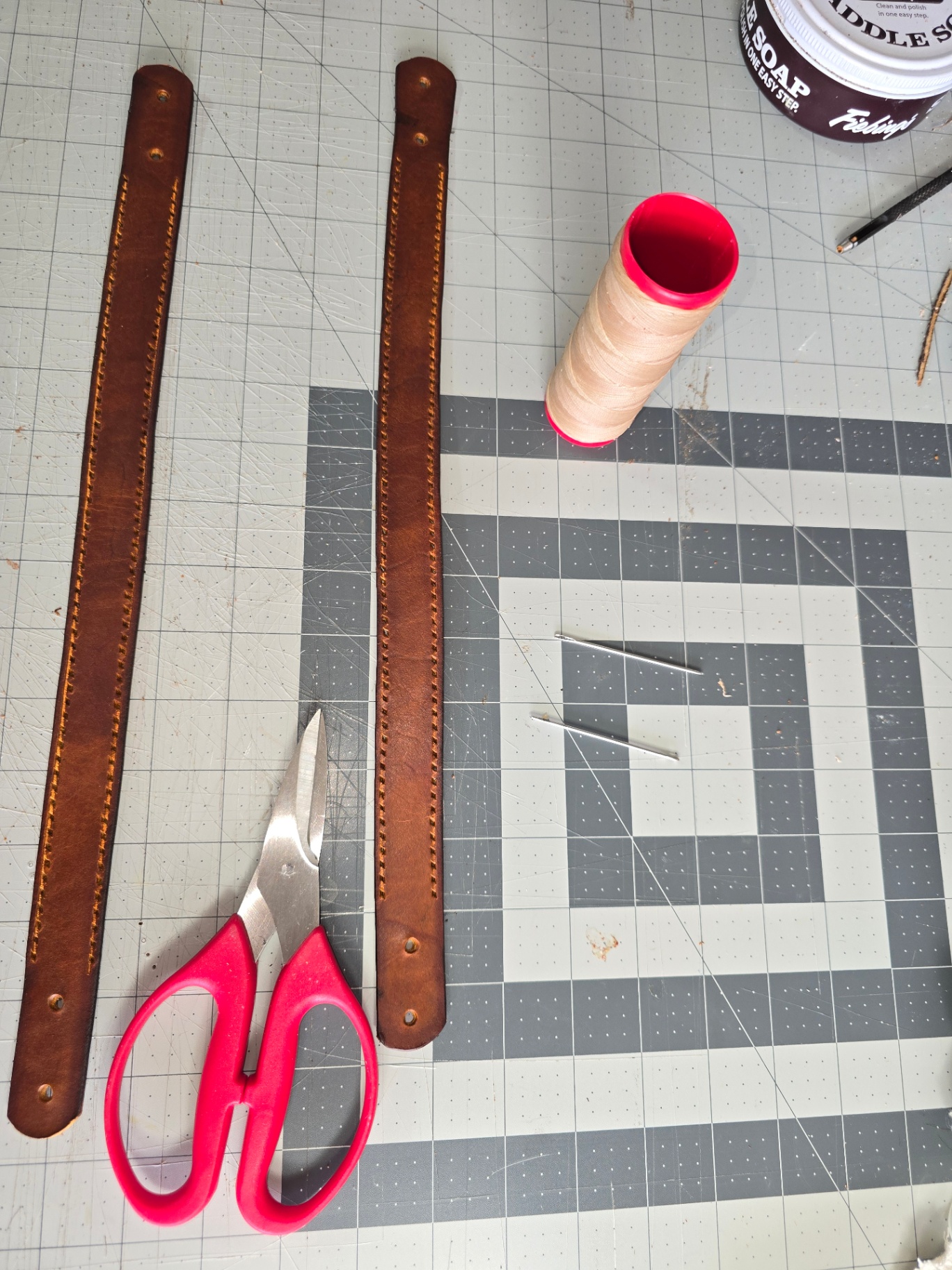
This is where the magic happens. Every pouch I make is hand-stitched using the saddle stitch method. Unlike a sewing machine, which uses two separate threads that can unravel if one breaks, a saddle stitch uses a single long piece of waxed thread with a needle on each end. The threads cross through every single hole. It is incredibly strong. It’s a slow process: one stitch at a time: but ensuring that every stitch is perfect is what makes the piece last a lifetime.
4. Hardware and Finishing
Then come the rivets and the closures. I love the "clink" of a solid brass snap or the weight of a heavy-duty rivet. For the belt loops, I make sure they are reinforced so you never have to worry about the pouch snagging on a branch and ripping off. Finally, there’s the burnishing. I use a wooden tool and some burnishing gum to rub the edges of the leather until they are smooth and glossy. The friction creates heat, which seals the fibers and gives it that professional, finished look.

Choosing the Right Pouch for Your Adventure
Not all pouches are created equal. Depending on what you’re doing, you might need something slim or something more substantial.
- The Minimalist: If you just need a place for your cards and a key, a slim card sleeve or a small pouch might do. I actually wrote about the minimalist wallet challenge recently: it’s surprising how much we carry that we don’t actually need.
- The Explorer: This is where the Buffalo Belt Pouch shines. It has enough room for a phone, a small notebook, and maybe a snack. It’s designed to be rugged.
- The Versatile Traveler: Sometimes you want a pouch that can pull double duty. We have a "Hair on Hybrid" pouch that can be worn on a belt or used as a small purse. It features hand-laced details and genuine hair-on hide, making it a bit more of a statement piece while remaining totally functional.

The Kilted Philosophy: Adventure Ready
When I’m at my workbench, I’m often thinking about where these pieces will end up. I picture them at Renaissance faires, on hiking trails in the Smokies, or tucked under a jacket in a busy city. To me, a leather belt pouch isn't just an accessory; it’s a tool for freedom. It frees up your hands and your pockets, letting you focus on the experience rather than your gear.
This philosophy extends to everything we do here. Whether it's a Journal Cover to protect your thoughts or a Rustic Tote for the daily grind, the goal is always the same: honest materials, handmade quality, and a design that’s ready for whatever comes next.
Caring for Your Gear
Once you have a high-quality leather pouch, you need to treat it right. Because I use genuine hide, it needs a little love every now and then. A bit of leather oil or conditioner goes a long way. It keeps the fibers supple and prevents them from drying out. If you're new to handmade goods, I’ve put together a guide on common mistakes people make with leather to help you keep your gear in top shape.
Final Thoughts
Stepping into the world of leather goods can feel a bit overwhelming with all the talk of "top grain" and "saddle stitching," but at the end of the day, it's about finding something that speaks to you. I love the connection to the past that a belt pouch provides. It’s a simple solution to a modern problem, wrapped in a material that has been used for thousands of years.
As you start your own journey into mastering "modern sporran utility," just remember to look for quality over flash. Look for the stitches that show a human hand was involved. Look for the hide that looks like it could survive a trip through the Highlands.
Thank you so much for taking the time to read a bit about what I do. I truly appreciate your support and your interest in real craftsmanship. It’s folks like you who keep these old traditions alive.
If you ever have questions about a specific piece or just want to talk shop, don't hesitate to reach out. I’m usually at the bench, but I always have time for a fellow adventurer.
Stay ready for the next adventure,
Eric
Founder and Owner, The Kilted Leatherworker LLC