

Hi there, I’m Eric.
If you were to step into my workshop on a Tuesday afternoon, you probably wouldn’t hear what you’d expect from a modern manufacturing business. There’s no hum of heavy machinery, no rhythmic thumping of industrial sewing motors, and definitely no buzzing of computer-controlled lasers. Instead, you’d hear the soft skritch-skritch of a needle passing through hide and the steady, rhythmic pull of waxed thread.
I’ve made a very conscious choice here at The Kilted Leatherworker LLC to keep things slow. In a world that seems to be racing toward "faster, cheaper, and more," I’ve decided to stay right here, sitting at my bench, doing things by hand. Today, I wanted to chat with you a bit about why I’ve banned sewing machines from my process and what that means for the gear you carry every day.
The Soul in the Stitch
There is something deeply personal about a hand-stitched item. When I pick up a piece of leather to turn it into a minimalist wallet, I’m looking at every grain, every scar, and every natural marking. When I start stitching, I am touching every single inch of that product.
I often get asked, "Eric, wouldn't it be easier to just use a machine?" Of course it would! A machine can stitch a wallet in about thirty seconds. It takes me significantly longer, sometimes an hour or more just for the stitching phase. But the reason I don't use a machine isn't because I'm a glutton for punishment. It’s because a machine-made stitch and a hand-made stitch are fundamentally different on a structural level.
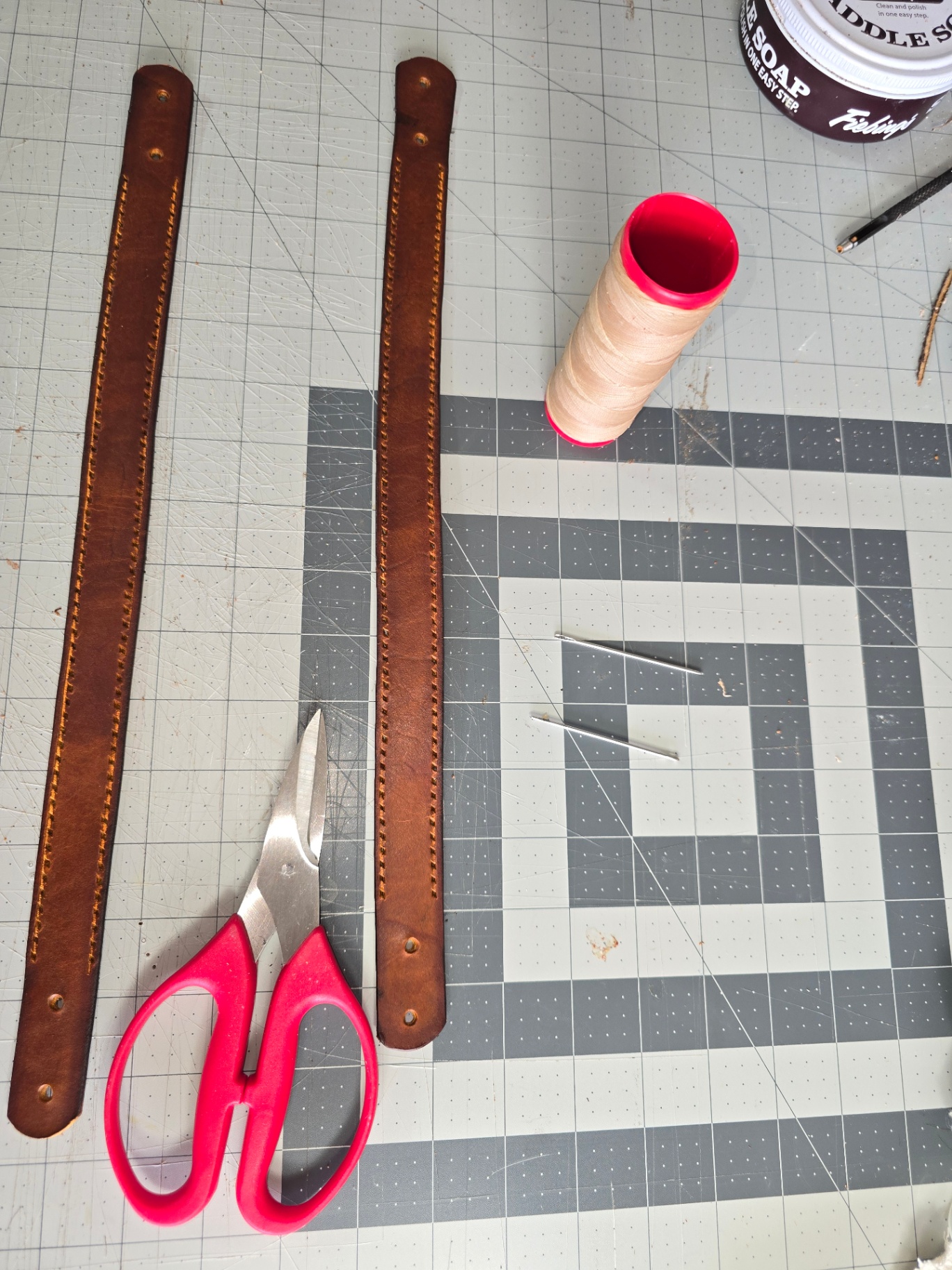
Most machines use what’s called a "lock stitch." This involves two threads: one on top and one on the bottom (the bobbin). They meet in the middle and "lock" together. It looks great, but here’s the catch, if one thread breaks, the whole line of stitching can start to unravel like a loose sweater. We’ve all had a store-bought bag or pair of pants where a single snag led to the entire seam falling apart.
I use the traditional saddle stitch. This involves two needles on a single piece of thread. The needles pass each other through every single hole. If one thread happens to wear through or snap ten years down the line, the other thread is still there, holding the seam tight. It won't unravel. It’s a bit of "over-engineering" that ensures your gear stays together through thick and thin.
Working with Honest Materials
When I talk about "honest materials," I’m talking about leather that looks like leather and thread that can stand up to the elements. I love using full-grain hides because they don't hide their history. If a cow brushed up against a barbed-wire fence or survived a particularly buggy summer, those marks are often visible. To me, that’s beauty. It’s real.
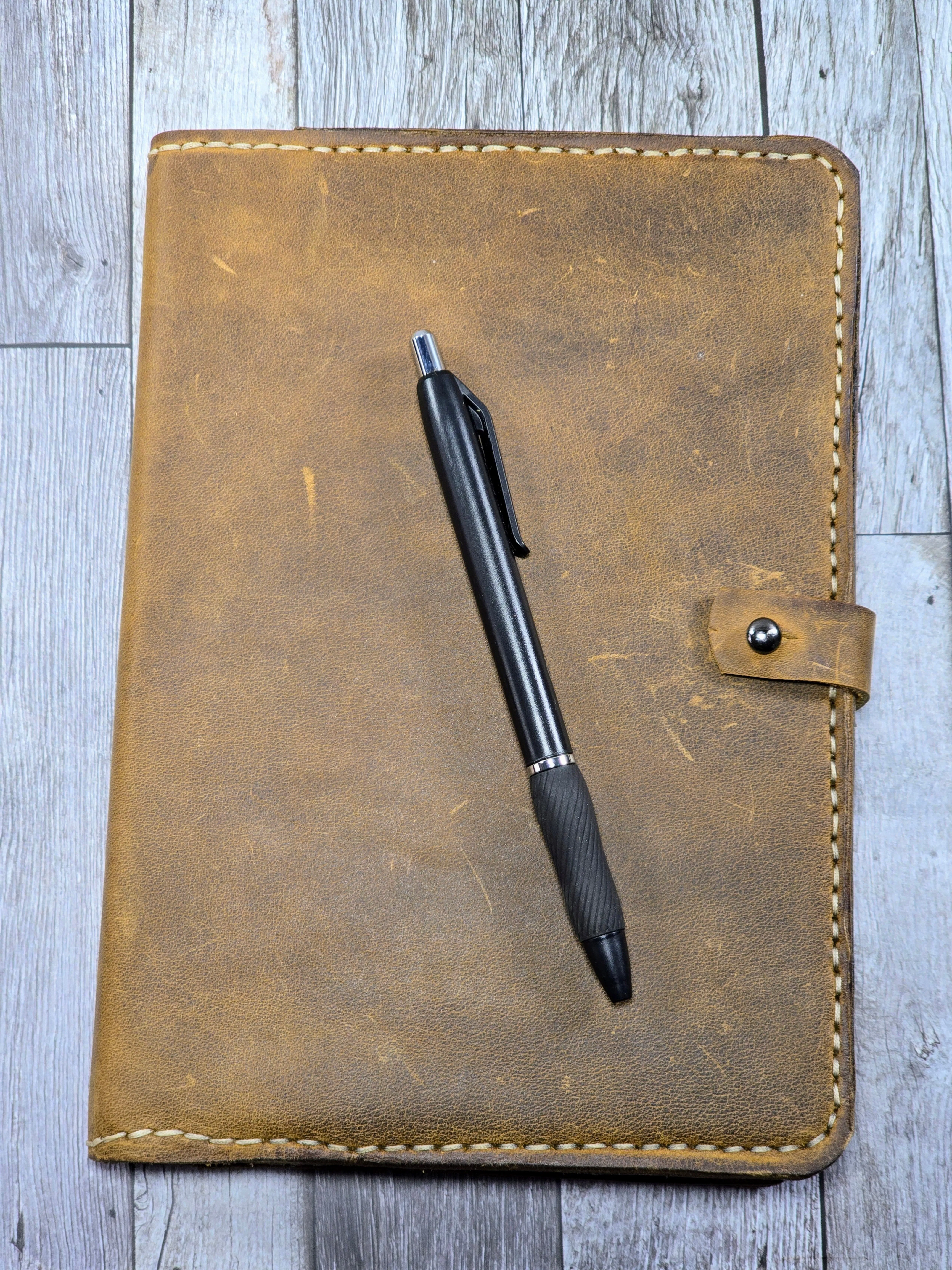
Combining these honest materials with hand-stitching creates a finished product that has a distinct "hand." You can feel the slight rise of the thread where it sits on the surface of the leather. It’s tactile. It’s rugged. Whether it's a handcrafted leather journal cover or a rugged belt pouch, you can see the care that went into every placement.
I’ve found that using high-quality, waxed polyester or linen thread is the only way to do justice to the leather I source. The wax helps the thread glide through the holes I’ve punched, and it also protects the fibers from moisture and rot. It’s a small detail, but it’s one of those things that ensures the "personal touch" lasts for decades.

The Meditative Rhythm of the Bench
I’ll be honest with you, sometimes the work is hard on the fingers. Pulling thread tight over and over again requires a certain amount of calloused strength. But there’s a meditative quality to it that I’ve grown to love. As I move the needles through the leather, I’m not thinking about my to-do list or the stresses of the day. I’m focused on the tension of the thread. Is it too tight? Is it too loose? Is the angle of the stitch consistent?
This slow process allows me to catch things a machine never would. If a section of leather feels slightly thinner or more pliable than the rest, I can adjust my technique on the fly. I’m constantly inspecting the work as I go. By the time I’m done with a mini leather journal cover, I’ve looked at every square millimeter of it.
I think that’s why so many people are moving back toward handmade goods. When you buy something that was made "one step at a time," you’re buying a piece of someone’s time and focus. You’re not just a transaction; you’re the recipient of a craft that has been passed down for centuries.
A Personal Touch in Every Piece
Every time I finish a piece, I feel a sense of pride that just doesn't happen with mass-produced items. Take, for example, our burgundy leather journal cover. The way the cream-colored thread pops against that deep red leather is something I never get tired of seeing. It’s a classic look that only hand-stitching can truly achieve with that level of precision and character.
I also love playing with different techniques, like hand-lacing. If you’ve seen our hair on hybrid belt pouch, you’ll notice the edges aren't just stitched; they are laced. This is a very traditional technique that provides a beautiful, decorative border while being incredibly strong. It’s another "no machines allowed" moment in the shop. A machine simply cannot do that kind of lacing; it requires a pair of hands, a lot of patience, and a sharp eye.

Why This Matters to You
You might be wondering, "Okay, Eric, it’s cool that you enjoy the process, but what does that do for me?"
It boils down to three things: Durability, Aesthetics, and Story.
- Durability: Because of that saddle stitch I mentioned earlier, your gear is essentially "buy it once" equipment. I want you to be able to pass your belt pouch down to your kids. I want your wallet to be the last one you ever need to buy.
- Aesthetics: There is a specific "slant" to a hand-stitched seam that machines try to mimic but never quite nail. It has a thickness and a texture that screams "quality." It looks expensive because it’s made with expensive time and attention.
- Story: When someone asks you where you got your gear, you have a story to tell. You’re not just saying "I got it at a big box store." You’re saying, "A guy named Eric made this by hand in his shop." There’s a connection there that makes the item more valuable than the sum of its parts.
Keeping the Tradition Alive
Starting The Kilted Leatherworker LLC was about more than just making accessories. It was about preserving a way of making things that is slowly being forgotten. As I sit here today, looking at the stack of hides waiting to be cut, I’m reminded of how lucky I am to spend my days this way.
I’m grateful that you appreciate this kind of work. It’s because of folks like you: who care about where their items come from and how they are made: that I get to keep my "No Machines Allowed" sign firmly posted in the window.
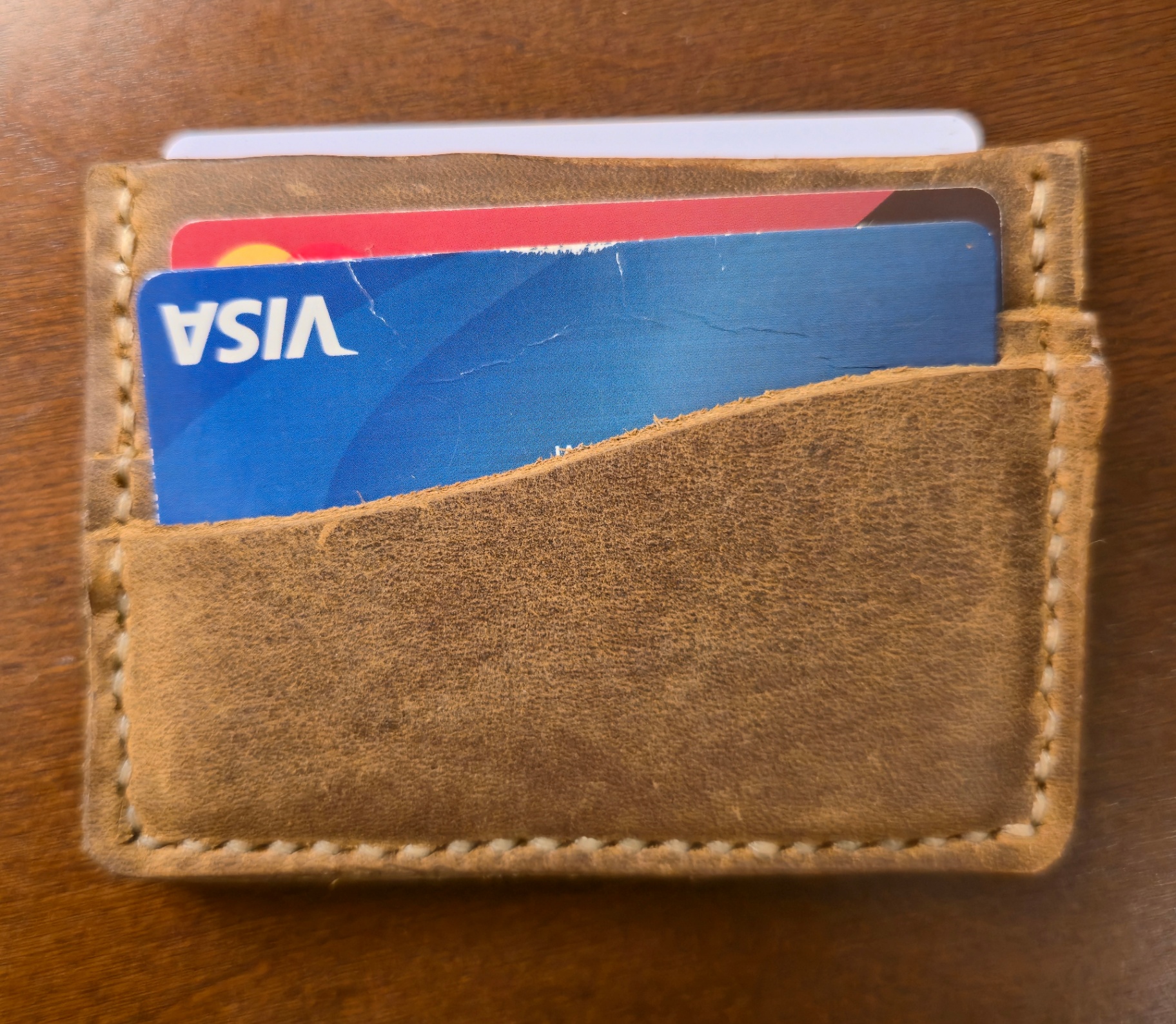
Whether you’re looking for a new mini padfolio for your next board meeting or a three pen loop secure mini journal cover for your field notes, know that every single stitch was put there by me, with you in mind.
If you ever have questions about how a specific piece is made, or if you want to know more about the different types of stitches I use, don't be a stranger. You can always reach out through our contact page or check out our about page to learn more about our story.
Thank you for supporting small-scale craftsmanship. It means the world to me and my family.
Warmly,
Eric
Founder, The Kilted Leatherworker LLC