

Hi, I’m Eric. If you’ve walked into a department store or scrolled through an online shop lately, you’ve probably noticed a term popping up everywhere: "vegan leather." It sounds great on paper, it’s trendy, it sounds eco-friendly, and it usually comes with a lower price tag. But here’s the thing I’ve noticed after years of working at my bench: that "vegan" bag usually looks its absolute best the day you buy it. From that moment on, it’s a slow slide toward the trash can.
I started The Kilted Leatherworker LLC because I wanted to get away from the "disposable" culture we live in. I wanted to make things that actually mean something, things that stick around long enough to tell a story. When I’m sitting in my workshop, working one step at a time to ensure every stitch is perfect, I’m thinking about how that piece will look in ten, twenty, or even fifty years.
If you’re wondering why your synthetic bag starts to look like a science experiment gone wrong after a few years while a real hide bag just gets better, let’s talk about what’s actually happening under the surface.
The Honest Materials Philosophy
When I first started out, I had to make a choice about what kind of materials I wanted to represent my name. As you may have guessed, I landed firmly on "Honest Materials." To me, that means using things that come from the earth and return to it gracefully. It means using buffalo and calf skin that have a history.
There’s something about holding a piece of genuine leather that just feels... right. It has a weight, a smell, and a texture that plastic just can't replicate. When I build a minimalist leather wallet, I’m not just looking for something that holds cards; I’m looking for a material that is going to survive being shoved into pockets, dropped on the floor, and handled thousands of times.

The 5-Year Test: Patina vs. Peeling
Let’s look into the future. Imagine it’s five years from today. You’re reaching for your favorite bag or pouch. If that item is made of "vegan leather" (which, let’s be honest, is usually just a fancy name for polyurethane or PVC plastic), you’re probably going to see some heartbreak.
Synthetic leather is essentially a thin layer of plastic bonded to a fabric backing. Over time, as you open and close the bag, the plastic flexes. Eventually, it loses its elasticity. It starts to crack. Then, it starts to peel away in little flakes, revealing the white fabric underneath. It looks tired. It looks cheap. And worst of all, it can’t be fixed. Once pleather starts to go, it’s done.
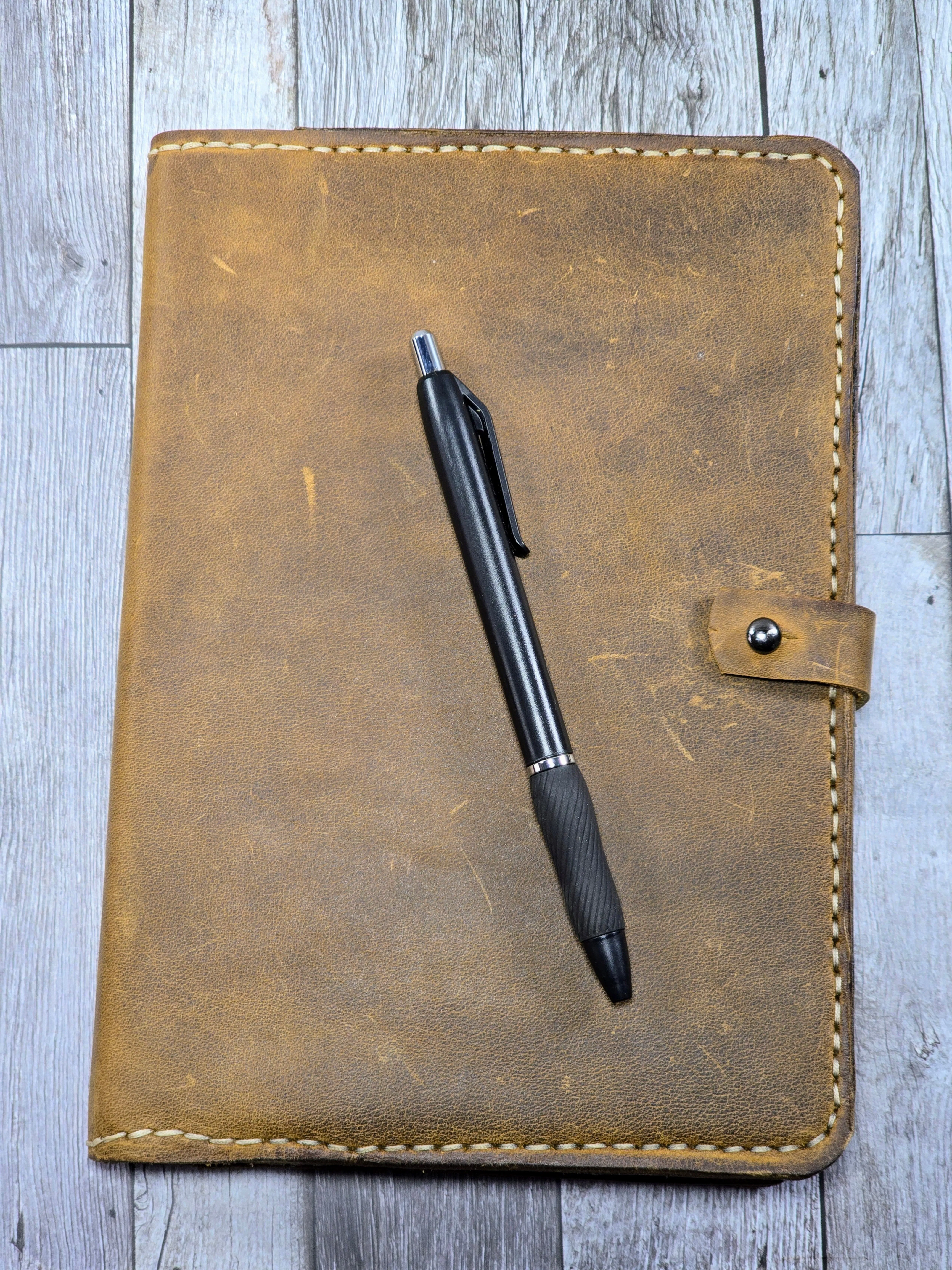
Now, look at a piece of real hide, like one of our journals and covers. In five years, that leather won't look "new" anymore, and that’s the best part. It develops what we call a patina.
A patina is the soul of the leather coming to the surface. It’s the result of the oils from your hands, the sunlight it’s been exposed to, and the little scratches from your adventures all blending together. The leather darkens, it softens, and it develops a rich glow that you simply cannot buy in a store. It doesn't wear out; it wears in.

Why Plastic Fails Where Hide Flourishes
I often think about the science of it while I’m working. Real leather is made of dense, interlocking collagen fibers. It’s a biological structure designed by nature to be tough and flexible. Even after the tanning process, those fibers remain. They breathe. They can absorb conditioners and oils.
Pleather, on the other hand, is a solid sheet of synthetic material. It doesn’t breathe. If you’ve ever used a synthetic pouch on a hot day, you might have noticed it feels a bit "sticky" or clammy. That’s because moisture has nowhere to go. That trapped moisture, combined with UV rays from the sun, actually accelerates the breakdown of the plastic bonds.
I’ve always felt that if I’m going to spend my time hand-stitching a piece, it deserves a material that can keep up with my effort. That’s why I lean so heavily on buffalo and calf skin. Buffalo leather, in particular, is legendary for its durability. Its grain is much more pronounced and the fibers are thicker than traditional cowhide. When I make a buffalo leather belt pouch, I know it’s going to handle whatever the trail throws at it.

The "Cold Root Beer" Moment: A Quick Reflection
Sometimes, when I’ve been at the workbench for a few hours and the repetitive motion of the needles starts to get to me, I’ll step outside and grab a cold root beer from the fridge. I’ll sit there, look at the scraps of leather on the floor, and think about the journey each piece takes.
There’s a certain peace in knowing that I’m not contributing to the mountain of plastic waste that defines so much of modern fashion. Using real hide is a choice to be sustainable through longevity. If you buy one of my handcrafted leather bags and use it for twenty years, that’s twenty years of you not buying five different plastic bags that would have ended up in a landfill.
Why Craftsmanship Matters
You might wonder why we bother with things like "hand-stitching" or "saddle stitching." Why not just run it through a machine and call it a day?
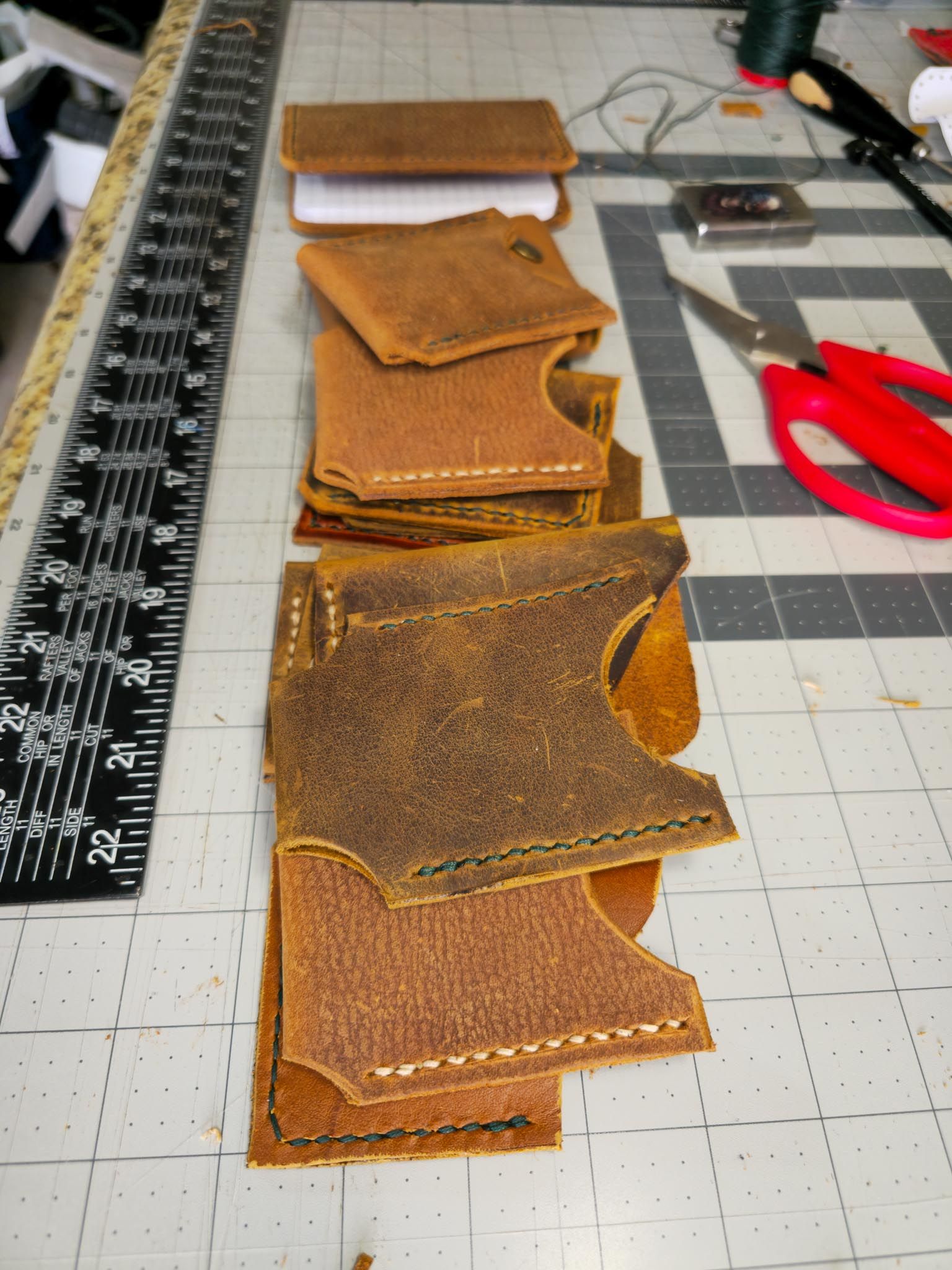
Well, a machine-made lockstitch has a fundamental flaw: if one thread breaks, the whole seam can unravel. But when I sit down to do a hand-stitched seam, I’m using two needles and a single thread that crosses itself in every single hole. If one part of that thread ever wears through, the rest of the seam stays tight. It’s that focus on durability that makes the difference.
I love the feeling of pulling the thread tight, knowing that this specific stitch is going to hold for a lifetime. It’s about patience. It’s about ensuring that the product I send to you is something I’d be proud to hand down to my own family. You can see that care in everything from our card holders to our most complex pouches.
Making the Right Choice for Your Next Pouch
I get it, sometimes the price of a real leather piece can be a bit of a shock compared to the "bargains" you see at the mall. But I like to think of it as an investment in a future friend.
When you choose a handcrafted journal cover, you aren't just buying a place to store your notes. You're buying a companion for your thoughts that will grow old with you. You're choosing a material that reflects your own values: honesty, strength, and a bit of rugged character.
Before you buy your next bag or accessory, ask yourself: "How will I feel about this in five years?" If the answer involves peeling plastic and a trip to the garbage bin, maybe it’s time to look at something a bit more... real.
Thank You for Being Part of the Journey
I feel so lucky that I get to spend my days working with these incredible materials. It’s a craft that keeps me grounded and constantly reminds me of the value of hard work and quality. Whether you’ve been a long-time customer or you’re just now finding out about The Kilted Leatherworker, I want to say thank you.
Your support allows me to keep the tradition of hand-stitched leatherwork alive, one piece at a time. If you ever have questions about how to care for your leather or which hide is right for your lifestyle, please don't hesitate to reach out to me. I'm always happy to talk shop with someone who appreciates the good stuff.
Thanks for taking the time to read this. I hope it helps you look at your next leather purchase with a little more "insider" knowledge. Here's to things that last!
Warmly,
Eric
Founder, The Kilted Leatherworker LLC