

Hi, I’m Eric. If you’ve been following along with our "Adventurer’s Trilogy," you know we’ve traveled through misty highlands and found solace in the quiet of the pines. But for this final story, I wanted to bring things a little closer to home.
Have you ever held something in your hands and felt the weight of decades? Not just physical weight, but the gravity of memories?
That’s what I think about every time I sit down at my workbench here at The Kilted Leatherworker. When I’m pulling a needle through thick hide, I’m not just making a bag. I’m making a promise. I’m promising that this piece: what I call The Wayfarer’s Tote | Hand-Stitched Leather Carry-all: will still be around long after I’ve finished my last soda of the day and hung up my apron for good.
This is the story of one bag, three people, and fifty years of life.
Part One: The Foundation (1986)
In the spring of 1986, Arthur didn’t want much. He was a man of simple tastes: a good pair of boots, a sturdy truck, and a cold ginger ale on a Saturday afternoon. He was planning a trip from the rolling hills of the Midwest out toward the coast, and he needed a bag that could handle being tossed into the back of a flatbed without falling apart.
He found a leatherworker: someone who worked much like I do today: and walked out with a brand-new, hand-stitched tote. At the time, it was stiff. It was a bright, uniform tan. It smelled like a new saddle and creaked whenever he moved the handles.
"It'll break in," the maker told him. "Just give it time."
Arthur took that bag across twelve state lines. It carried his maps, a heavy wool blanket, and his tools. It sat in the dust of the Grand Canyon and the humidity of the Gulf Coast. Little did he know, every scratch from a stray branch and every drop of rain was actually "seasoning" the leather.
By the time he returned home, the bag didn't creak anymore. It hummed. The handles had molded specifically to the shape of his grip. It wasn't just a bag anymore; it was a record of where he’d been.

Part Two: The Softening (2008)
Fast forward twenty-two years. Arthur’s daughter, Elena, was heading off to start her first real job as a landscape architect. She needed something professional, but she hated the look of those flimsy, mass-produced nylon bags that everyone else was carrying.
Arthur reached into the back of his closet and pulled out the tote. It looked completely different than it did in '86. The leather had deepened into a rich, honey-colored mahogany. It was supple: so soft it felt like a second skin, yet it stood upright with a quiet strength.
"It’s seen some miles, El," Arthur said as he handed it over. "But it's got plenty left."
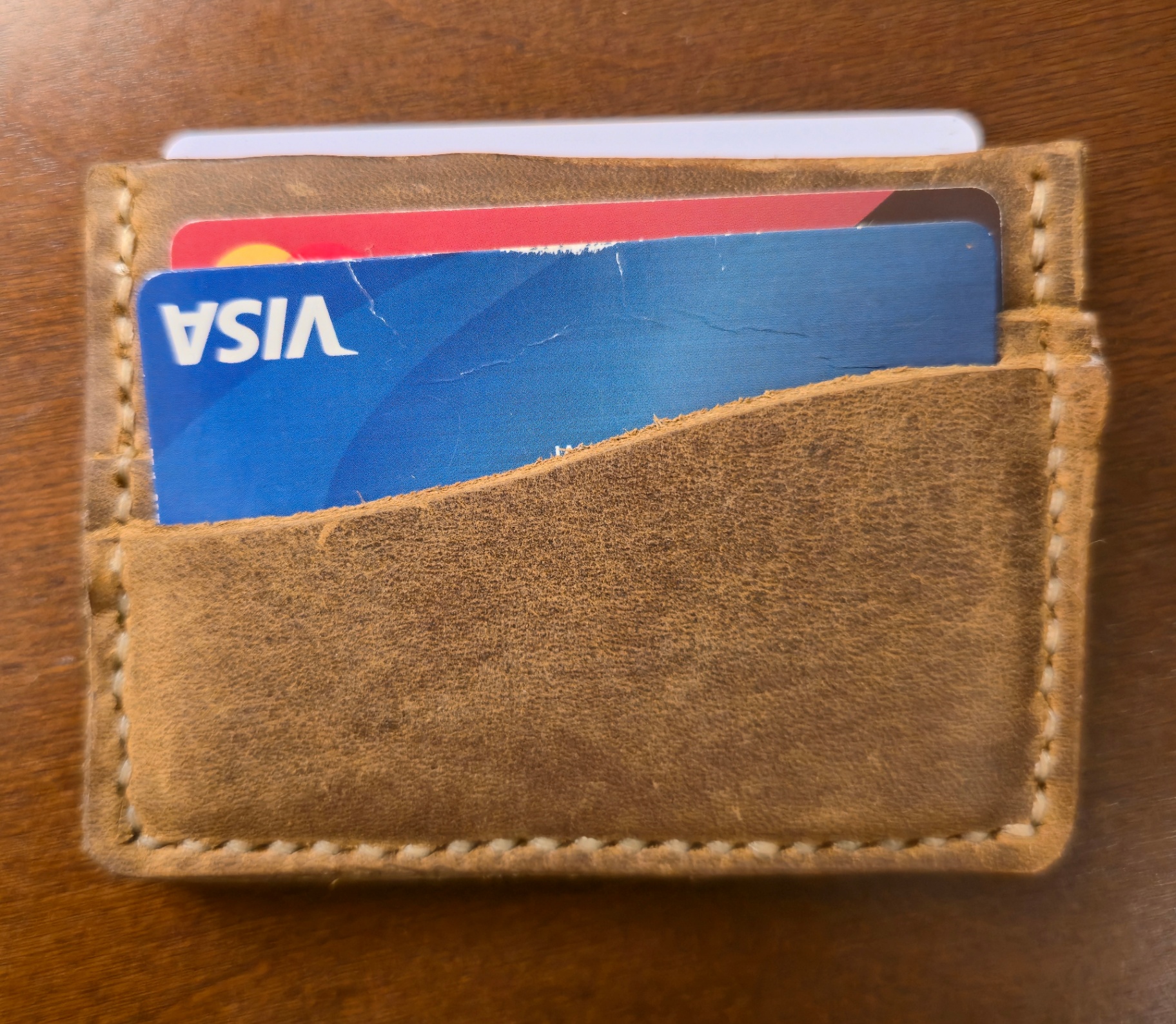
Elena used The Wayfarer’s Tote every single day for the next fifteen years. It carried her blueprints, her heavy drafting pens, and a Minimalist Wallet she’d tucked into the interior pocket. She added her own layer of history to it. A faint ring on the bottom from a soda bottle she’d set down while working on a site. A slight darkening of the leather where she always slung it over her shoulder.
She learned something important during those years: quality isn't about being indestructible; it’s about aging gracefully. While her colleagues replaced their "fast fashion" bags every two years because the zippers broke or the "leather" peeled, Elena’s tote only got better. The hand-stitching: the same kind I use today: remained tight.

Part Three: The Modern Legacy (Today)
Today, the bag belongs to Leo, Elena’s son.
Leo is a college student, living in a world of digital screens and fast-paced schedules. But he’s always been a bit of a soul from another era. He likes the "analog" feel of things. When he carries the tote across campus, people stop and ask him where he got it. They think it's some high-end vintage find from a boutique in London or New York.
He just laughs and tells them, "It was my Grandpa’s."
Leo uses it to carry his laptop, a few heavy textbooks, and his Chronicler’s Cover | Burgundy Leather Journal Sleeve. Inside the tote, the interior view shows a lifetime of organization: from Arthur’s old compass to Leo’s modern tech.
The bag is nearly forty years old now. It’s no longer just a "Rustic Tote." It’s a family member. It’s been to weddings, funerals, first days of school, and cross-country moves. It’s proof that in a world of "throwaway" culture, some things are still worth keeping.

Why Hand-Stitched Leather Lasts Generations
I get asked a lot: "Eric, why do you spend so much time hand-stitching when a machine could do it in minutes?"
The answer is simple: The Saddle Stitch.
In the story above, the reason that bag survived three generations is that it was likely hand-stitched. You see, a sewing machine uses two threads that lock together in the middle. If one thread breaks, the whole seam can unravel like a zipper. But with a saddle stitch: the way I make every Wayfarer’s Tote: the two threads independently pass through every single hole. If one stitch wears out after thirty years of use, the rest of the seam stays perfectly intact.
It’s that kind of durability that turns a purchase into an heirloom.
What to Look for in an Heirloom Bag
If you’re looking to start your own family legacy, here are a few things I always tell people to look for:
- Full-Grain Leather: This is the top layer of the hide. It hasn't been sanded down or "corrected." It's the strongest part and the only part that will develop that beautiful patina (the shine and color change) over time.
- Robust Hardware: Look for solid metal snaps and rivets. On the Wayfarer’s Tote, I use heavy-duty hardware that’s meant to be opened and closed thousands of times.
- Simple Design: Trends fade. A classic, open-top tote with sturdy handles never goes out of style. It looked good in 1986, and it looks good in 2026.
- Hand-Finished Edges: This prevents the leather from fraying and protects the fibers from moisture.
Creating Your Own Story
I love the idea that someone reading this might pick up a piece from my collection today and, thirty years from now, their kid or grandkid will be using it.
There is something deeply satisfying about knowing that my work doesn't end when I ship the box. That’s actually just the beginning. The real "work" happens when you take that bag out into the world. You give it its character. You provide the stories. I just provide the canvas.
Whether it’s a The Highland Nomad pouch for your weekend hikes or a tote for your daily commute, these pieces are built to grow with you.
Frequently Asked Questions about Leather Heirlooms
How do I care for a bag so it lasts 50 years?
Honestly? Use it. The natural oils from your hands actually help keep the leather supple. Once or twice a year, you can apply a high-quality leather balm, but don't overthink it. Leather is resilient.
Does the leather get weaker as it gets softer?
Not if it's high-quality hide! In fact, as the fibers loosen up, the leather becomes less prone to cracking. It becomes "broken in," much like a good pair of baseball gloves or work boots.
Can I get a custom version of the Wayfarer’s Tote?
Absolutely. I love working on custom orders. If you have a specific vision for a piece you want to pass down, just reach out to me.
Final Thoughts from the Workbench
I want to thank you for coming along on this "Adventurer’s Trilogy" with me. Writing these stories has reminded me why I started The Kilted Leatherworker LLC in the first place. It wasn't just about leather; it was about the connection between people and the things they carry.
As I sit here today, I’ve got a cold root beer on the table and a fresh hide of leather ready to be cut. I’m thinking about who might own the bag I’m about to start. I’m thinking about where they’ll go and who they’ll eventually give it to.
If you’re ready to start your own story, I’d love to help you find the right piece. Feel free to browse the Frontpage Collection or learn more about our journey.
Thank you for supporting small-scale craftsmanship. It means the world to me.
Cheers,
Eric
Founder & Owner, The Kilted Leatherworker LLC