

This is a fictional installment of The Leatherworker’s Ledger. The characters are imagined, but the feeling behind the story is real.
Hi, I’m Penny.
Have you ever thought about the things that quietly hold your life together?
I think about that often when I’m working with leather. A belt is a simple object, but it carries more meaning than we sometimes give it credit for. It keeps things in place. It takes the pull and pressure of the day. It does its job without asking anyone to notice.
That is the heart of this week’s ledger entry: The Belt That Held the Weight.
The Leather Belt at a Glance
Before I tell you the story, I want to answer the practical questions plainly.
The Leather Belt from The Kilted Leatherworker:
- Costs $97
- Is handmade to order
- Requires a 7–10 business day crafting lead time before shipping
- Measures 1.5 inches wide
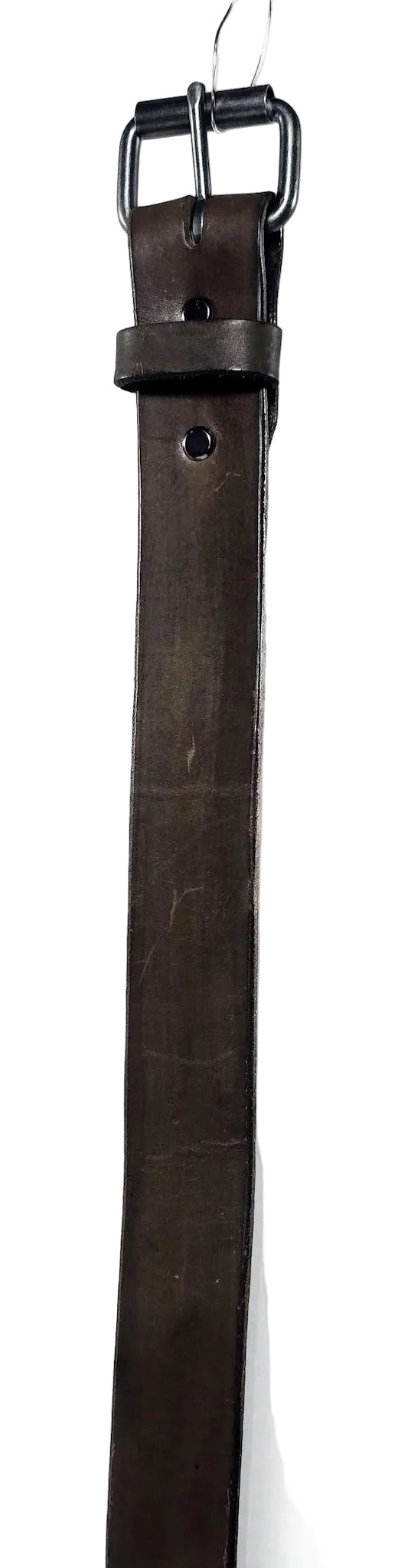
- Is made from chocolate full-grain leather
- Features a classic antique brass buckle that ages beautifully
- Comes in 34, 36, 38, and 40-inch waist sizes
- Works with jeans, dress trousers, or a kilt
- Is handcrafted in the USA
- Should be cared for with leather balm every few months, while the brass buckle can be wiped with a soft cloth
You can see the Leather Belt here.
I make each one with the understanding that a belt is not just an accessory. It is a foundation piece. It helps hold everything else up while you get on with the work.
The Farm at the Edge of Town
The character in this story is named Eli.
Eli had inherited a small working farm from his grandparents. It was not a picture-perfect farm with freshly painted fences and easy seasons. It had a leaning equipment shed, a tired tractor, and fields that seemed to ask for more than they gave back.
That year, a late storm damaged part of the barn roof. Then the well pump failed. A month later, one of the older outbuildings needed new supports before winter.
Eli did not have the money to fix everything at once.
So he made a list.
He repaired the well pump first. Then he salvaged lumber from the collapsed section of the shed. He patched the roof one section at a time. Every morning, he put on his work clothes, tightened his belt, and stepped outside before the sun had properly cleared the trees.
I imagine he was tired more often than he admitted.
There were days when the work seemed to undo itself. A new leak appeared after the next rain. A hinge broke after he replaced it. The tractor started only after several tries and a few words he probably would not repeat at the dinner table.
Still, Eli showed up.
That is what grit often looks like to me. Not a grand gesture. Not a perfect plan. Just returning to the same hard thing with enough patience to try again.
The Quiet Foundation
Eli’s belt was not special because it made the work easier. It did not lift the timber or repair the pump. It did not turn a difficult season into an easy one.
It simply stayed where it belonged.
The chocolate leather softened with use. The buckle picked up small marks from tools, fence posts, and long days leaning over the workbench. The belt held his trousers comfortably while he climbed ladders, carried boards, and worked beneath the barn.
I like that kind of usefulness.
There is something reassuring about a well-made object that does not need to be treated delicately. It can show signs of life and still do its job. In fact, the marks can become part of the story.
Eli’s neighbor, Ruth, noticed the belt one afternoon while bringing over a basket of eggs.
“You keep fixing things that look impossible,” she told him.
Eli laughed and said, “I’m mostly fixing the things that are in front of me.”
Ruth set the basket on the porch and stayed to help sort a box of old hardware. She knew the farm had been a strain, but she did not make a speech about it. She brought what she had, sat beside him, and helped find usable bolts among the rusted ones.
That small kindness mattered.
So did the belt. Not because it carried the burden for him, but because it was one less thing he had to worry about.
What Size Leather Belt Should I Order?
I recommend measuring a belt that already fits you well instead of relying only on the waist size printed on your jeans.
Here is the simplest approach:
- Lay the belt flat.
- Measure from the point where the buckle folds around the belt to the hole you use most often.
- Note that measurement in inches.
- Choose the closest available waist size: 34, 36, 38, or 40 inches.
If you do not have a belt to measure, measure around your waist where you plan to wear the belt. Consider the clothing you will wear with it. Jeans, heavier trousers, and a kilt may sit differently on your body.
I also suggest thinking about your everyday use. A belt worn with light dress trousers may fit differently from one worn over workwear. The best size is the one that lets you fasten the buckle comfortably without pulling the leather too tightly.
How a Well-Made Leather Belt Should Fit
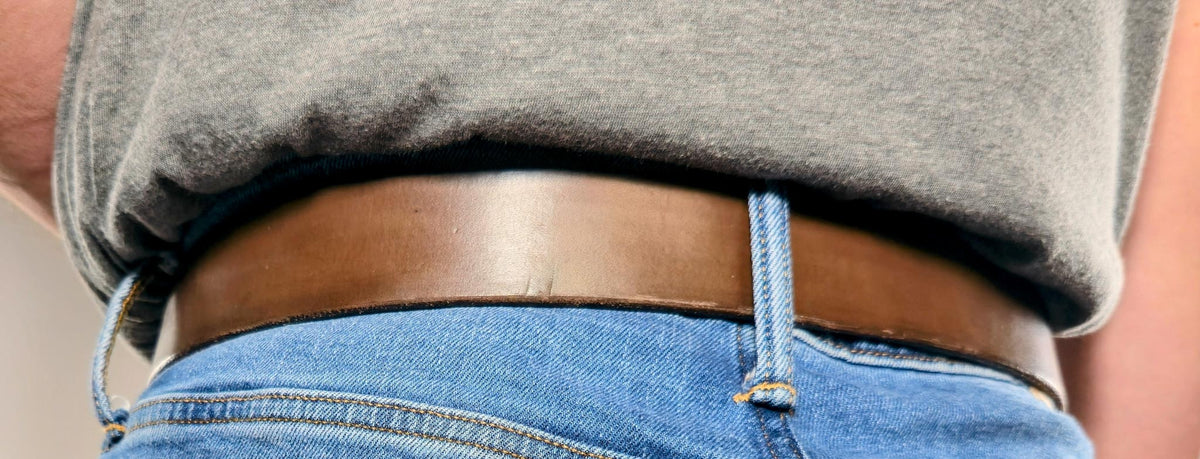
A good leather belt should feel secure without feeling restrictive.
I look for three simple things:
- The buckle should fasten near the middle holes. This leaves some room for adjustment.
- The belt should sit flat against your waist. It should not roll, pinch, or pull sharply in one direction.
- The tail should rest comfortably through the keeper. It should not hang excessively or feel too short to secure.
The Leather Belt is 1.5 inches wide, which gives it a useful balance. It has enough presence for jeans and everyday workwear, while the classic shape also works with dress trousers. I especially enjoy the way a rich chocolate finish settles into a kilt outfit without competing with the rest of the look.
Simple Care for Your Leather Belt
Leather care does not need to become a complicated ritual.
I recommend:
- Wiping away dust with a soft, dry cloth.
- Applying leather balm every few months, using a light coat.
- Letting the balm absorb before wearing the belt.
- Wiping the antique brass buckle with a soft cloth.
- Keeping the belt away from prolonged moisture and direct heat.
- Hanging it or laying it flat instead of keeping it tightly rolled for long periods.
The leather will change as you use it. It may soften, darken, and develop small marks. I see those changes as part of the belt becoming yours.
The buckle will age, too. The antique brass finish is meant to develop character rather than remain perfectly untouched.

Companions for the Road
I like pairing practical pieces that can grow with you.
- The Wayfarer’s Tote | Hand-Stitched Leather Carry-all offers a spacious place for tools, notebooks, and daily essentials.
- The Chronicler’s Cover | Burgundy Leather Journal Sleeve gives your notes and plans a durable home.
- The Highland Nomad keeps small essentials close when you want hands-free carry.
Each piece has a different job. Together, they make a useful rhythm: carry what matters, protect what you use, and choose things that can be repaired, maintained, and lived with.
The Work Continues
By the end of the season, Eli had not restored the entire farm.
The barn still needed paint. The old shed leaned a little more than he liked. There were lists on the kitchen table that would carry into spring.
But the well worked. The roof held. The tractor started more reliably. One wall of the workshop had been rebuilt with salvaged boards, each one carrying its own history.
On the first cold morning of winter, Eli stood at the barn door and looked over the work he had managed to finish. He reached down and adjusted his belt, then went inside to sharpen a saw.
That is the part I keep returning to.
The belt held the weight, but Eli did the hard work. The grace was in Ruth’s basket of eggs, the salvaged boards, the repaired tools, and the willingness to begin again the next morning.
Thank you for spending a little time with me and with this imagined story. I’m grateful for every person who values honest materials, patient workmanship, and objects made to stay useful.
I hope your own well-made things serve you faithfully through the ordinary days and the difficult ones.
Until next time, may you find a little grit in the work and grace in the things that help hold you up.
Frequently Asked Questions
How much does the Leather Belt cost?
The Leather Belt costs $97.
How long does the Leather Belt take to make?
The belt is handmade to order. Please allow 7–10 business days for crafting before shipping.
How wide is the belt, and what sizes are available?
The Leather Belt is 1.5 inches wide. It is available in 34, 36, 38, and 40-inch waist sizes.
What materials and buckle does the Leather Belt use?
The belt is made from chocolate full-grain leather and finished with a classic antique brass buckle that develops character with age. It is handcrafted in the USA.
Does the Leather Belt work with a kilt?
Yes. The 1.5-inch width and classic design work with jeans, dress trousers, or a kilt.
How should I care for the Leather Belt?
Condition the leather with leather balm every few months to help maintain its suppleness. Wipe the antique brass buckle with a soft cloth. Avoid prolonged moisture and direct heat.