

Hi, I'm Eric.
I’ve always believed that the things we carry should tell a story. Not just the story of where they were made, but the story of where they’ve been. When I’m at my workbench at The Kilted Leatherworker, I’m often daydreaming about the rugged landscapes of the Scottish Highlands: the place that inspires almost everything I stitch together.
I had an idea recently. Instead of just telling you why a certain leather is durable, I wanted to show you. I wanted to take you on a journey. So, I’ve decided to start a little three-part series of stories. These are fictional, but the feelings: and the gear: are very real.
Grab a cold soda, settle in, and let’s head into the mist.
The air in Glen Coe doesn't just sit; it breathes.
It’s a heavy, wet breath that smells of damp earth, ancient stone, and the distant, briny promise of the Atlantic. As I began my ascent toward the "Lost Valley," the mist rolled in like a slow-moving curtain, swallowing the peaks of the Three Sisters until the world felt only as large as the ten feet of heather and rock directly in front of me.
I adjusted the straps of my pack, feeling the familiar weight of my kilt swaying with my stride. But it was the weight at my hip that felt the most reassuring. It was The Highland Nomad.
Every few minutes, my hand would instinctively drop to the side of my hip, brushing against the grain of the buffalo hide. If you’ve ever felt high-quality buffalo leather, you know it has a soul of its own. It’s not perfectly smooth like some factory-stamped calfskin. It’s pebbled, rugged, and full of character. In the damp Scottish air, the leather felt cool and incredibly tough, as if it were enjoying the weather as much as I was.

The Gear That Breathes With You
There’s something about being alone in the wilderness that makes you hyper-aware of your equipment. When the wind picks up and the rain starts to turn from a drizzle into a "proper" Highland soak, you don't want to be worrying about your gear.
I reached down to the toggle of The Highland Nomad. Even with fingers starting to grow numb from the mountain chill, the leather closure was easy to manipulate. I didn't need to fumble with a tiny zipper or a plastic clip that might snap in the cold. Inside, my compass and a small tin of matches stayed bone-dry.

I’ve spent a lot of time ensuring that every stitch I make is perfect, and standing there in the middle of a glen that has seen centuries of clan battles and nomadic travelers, I understood why. In a place like this, "good enough" isn't good enough. The buffalo hide I use for The Highland Nomad is specifically chosen because it’s thicker and more fibrous than standard cowhide. It’s water-resistant by nature, but it also develops a patina that tells the story of every raindrop it’s ever encountered.
As I climbed higher, the terrain turned into a scramble of wet schist and loose scree. I slipped once, my hip taking the brunt of a slide against a jagged rock face. My first thought wasn't for my leg, but for the pouch. I looked down. A small scuff marked the surface, but the leather hadn't torn. In fact, the scuff almost seemed to belong there. That’s the beauty of rugged gear: it wears its history on its sleeve (or its flap, in this case).
A Moment in the Lost Valley
By the time I reached the mouth of the Coire Gabhail: the Lost Valley: the sun was trying to commit a miracle. A sliver of golden light pierced through the grey, turning the mist into a glowing amber haze. I found a flat stone and sat down, finally cracking open a cream soda I’d been saving for the summit.
I took off The Highland Nomad and laid it on the rock beside me. Looking at it there, against the backdrop of the rugged mountains, it looked like it belonged. It didn't look like a "product." It looked like a tool.
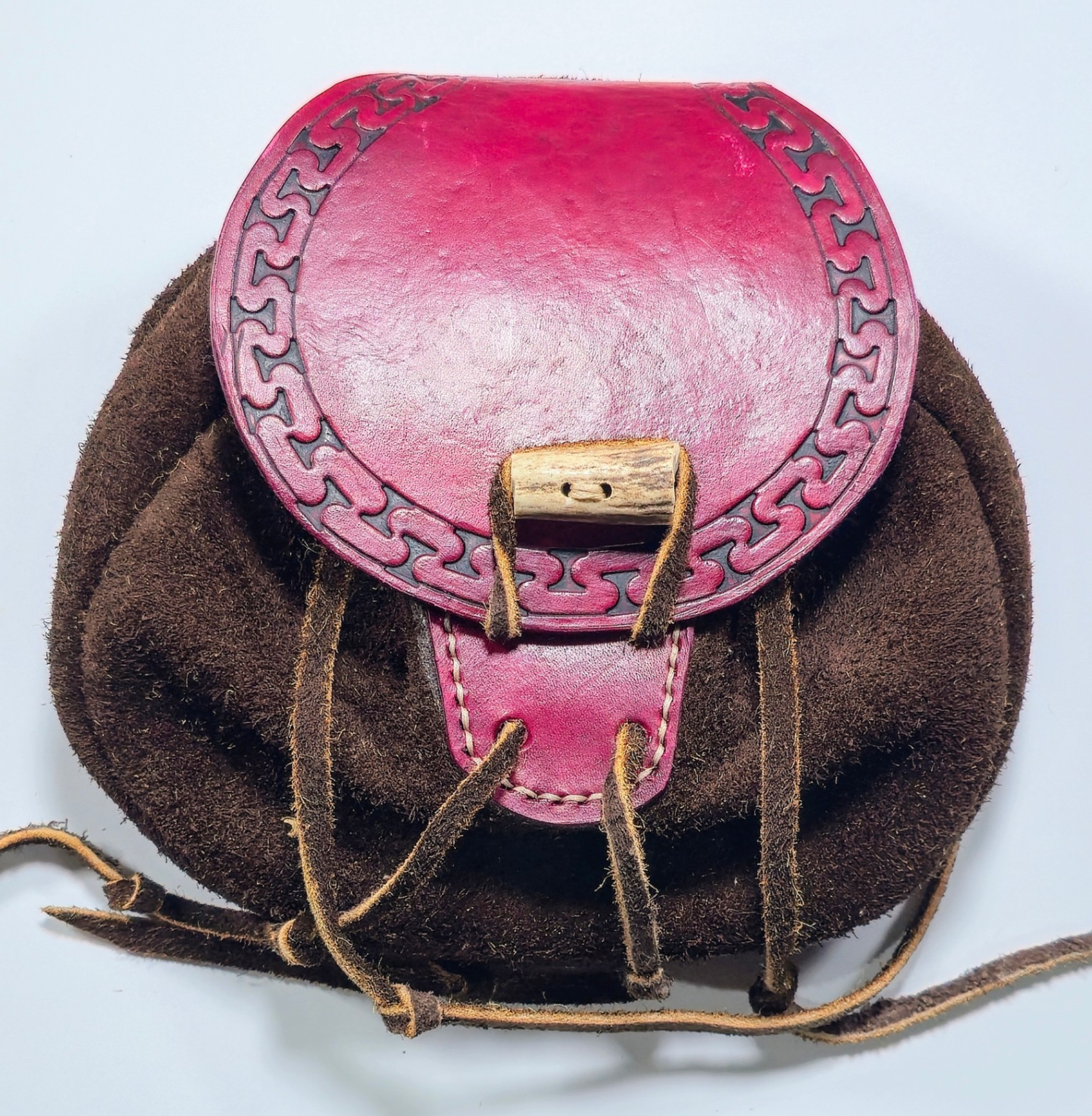
As you may have guessed, I’m a bit of a stickler for the "feel" of things. When I’m in the shop, I spend a lot of time running my hands over the hides. I want to make sure that when you reach for your pouch or your wallet, you feel that connection to the craft. There’s a certain honesty in buffalo leather. It doesn't hide its scars. Much like the Highlands themselves, it’s beautiful because it is raw.
Why Buffalo Leather for the Nomad?
I often get asked why I prefer buffalo hide for my pouches and bags. If you’re planning your own journey: whether it’s through a misty glen or just through a busy Tuesday: here is why I choose this material:
- Extreme Durability: Buffalo hide has a wider and thicker fiber structure than cowhide, making it significantly stronger and more resistant to tearing.
- The Texture: You can see and feel the natural grain. It isn't sanded down to look "perfect." It keeps the markings of the animal's life, ensuring that every single Highland Nomad is one-of-a-kind.
- Weather Resistance: While no leather is a raincoat, buffalo hide handles moisture exceptionally well. It doesn't stretch out of shape when it gets damp, and it dries with its integrity intact.
- The Patina: Over time, the oils from your hands and the exposure to the elements will darken the leather, giving it a rich, vintage look that you just can't fake.
Standing there in the Lost Valley, I felt a deep sense of gratitude. Gratitude for the artisans who came before me, and gratitude for the fact that I get to spend my days creating things that might one day accompany you on a journey like this.
The Return Journey
The descent was quicker, the mist chasing me back down toward the road. My boots were soaked, and my kilt was heavy with water, but the essentials inside my pouch were safe.
When I finally got back to my vehicle, I took a moment to wipe down the leather. It was darker now, having soaked up a bit of the Scottish soul. Little did I know when I started making these that I’d feel so protective of them. Each one is like a little piece of the workshop that goes out into the world.
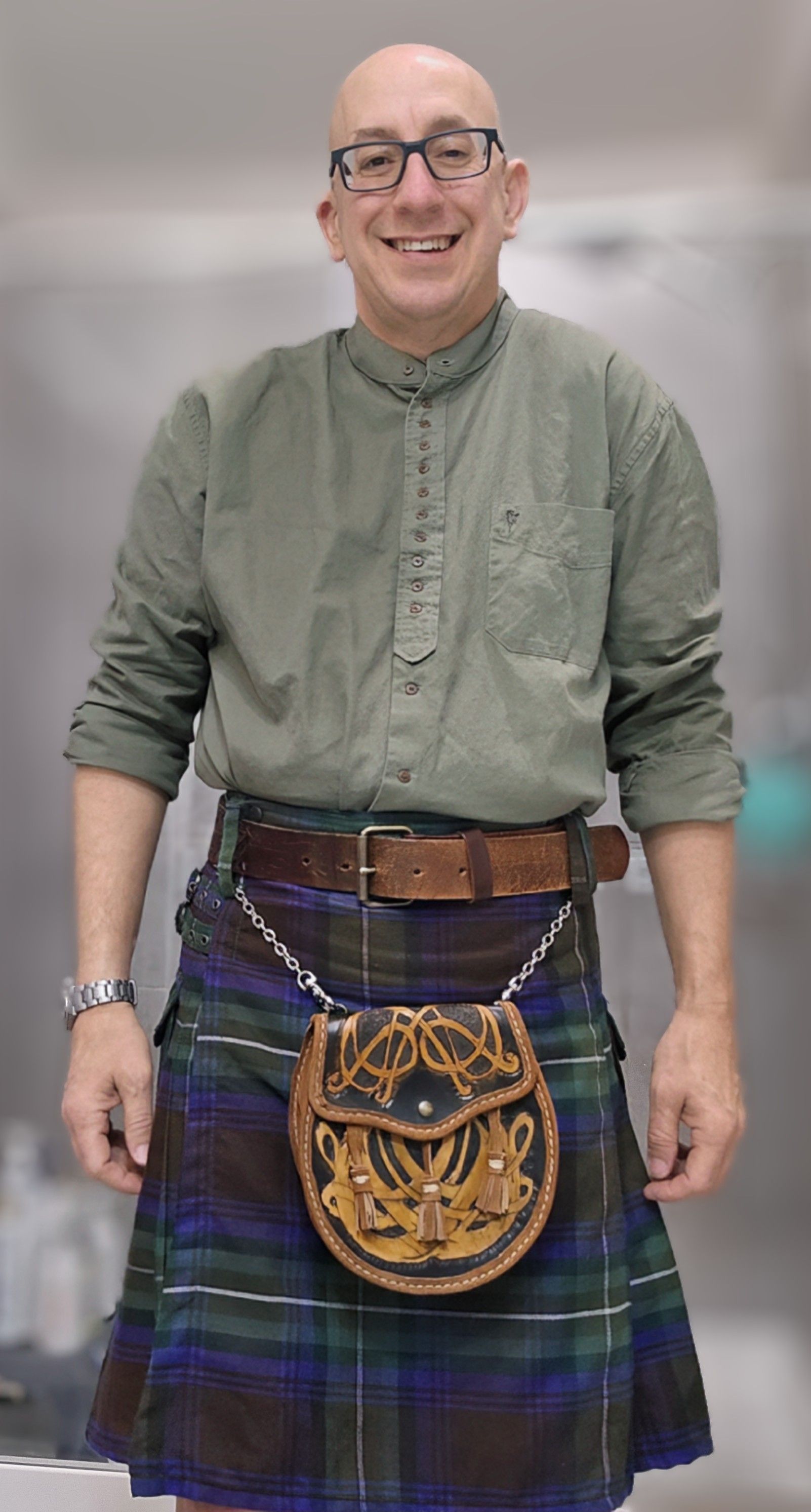
Whether you’re a hiker, a reenactor, or just someone who appreciates a well-made accessory, I want you to feel that same sense of reliability. When you strap on a piece from The Kilted Leatherworker, you aren't just wearing an accessory. You’re carrying a piece of gear designed to survive the mist.
What’s Next?
This was just the first leg of the journey. Next week, I’ll be sharing the second story in this series. We’ll be moving away from the rugged mountains and looking at a different kind of travel: one that requires a bit more organization and a different kind of leather companion.
If you’ve been looking for a companion for your own adventures, I’d love for you to check out The Highland Nomad. It’s built for the glens, but it’s just as happy on a belt in your backyard.
Thank you so much for taking the time to read this and for supporting my small business. It truly means the world to me that I get to share these stories and my craft with you.
Keep wandering,
Eric
Founder, The Kilted Leatherworker LLC