

Hi, I’m Penny! If you’re anything like me, your notebook isn't just a stack of paper. It’s where your wildest ideas live, where your travel plans start, and where you vent after a long day. When I first started working here at The Kilted Leatherworker, I quickly realized that a leather cover is more than just an accessory: it’s a companion.
Whether you’ve just picked up The Chronicler’s Cover | Burgundy Leather Journal Sleeve or you’ve had a trusty leather wrap for years, you probably want to know one thing: how do I keep this thing alive long enough to pass it down to my kids?
Leather is an "honest" material. It breathes, it stretches, and it remembers everywhere it’s been. But like anything worth having, it needs a little love. I’ve put together this simple, proven framework to help you care for your leather notebook cover so it truly lasts a lifetime.
1. The "Less is More" Daily Habit
One of the biggest mistakes I see people make is over-treating their leather. They get a new cover and immediately want to douse it in oils and waxes. My advice? Relax! Take a breath, grab a cold soda, and let the leather be itself for a while.
The best thing you can do for your journal cover is to use it. The natural oils from your hands are actually one of the best conditioners out there. Every time you pick up your journal to write, you’re helping it develop that deep, rich glow we call a patina.
Simple daily rules:
- Keep it cool: Leather hates extreme heat. Don’t leave your journal on a sunny car dashboard or right next to a heater. It’ll dry out faster than a soda left open on a Texas porch in July.
- Let it breathe: Avoid storing your leather in plastic bags. Leather is skin, and it needs air to prevent mold or "sweating."
- Don't overstuff: I know it's tempting to shove every receipt and ticket stub into your mini leather journal cover, but overstretching the leather can permanently change its shape.

2. Regular Cleaning: The Gentle Touch
You don’t need a specialized laboratory to clean your leather. Most of the time, a simple dusting is all it needs. Once a week (or whenever you notice it looking a bit dull), take a soft, dry cotton cloth and give it a quick wipe-down.
If you’ve taken your journal on an adventure and it’s come back with a bit of actual dirt on it, here is my "go-to" cleaning method:
- Dust first: Use a soft brush or cloth to remove loose dirt.
- Damp, not wet: Take a clean cloth and make it slightly damp with plain water. Wring it out until it’s barely moist.
- Wipe gently: Rub in circular motions.
- Air dry: This is the most important part. Let it dry naturally in a shaded spot. Never, ever use a hair dryer to speed things up: that’s a one-way ticket to Cracks-ville.
3. Conditioning: Feeding the Leather
Think of conditioning like a spa day for your journal. You only need to do this once or twice a year. If you do it too often, the leather can become "soggy" and lose its structure.
I personally love using a beeswax-based balm. It smells incredible and provides a nice layer of protection.
How to condition like a pro:
- Remove everything: Take out your notebook inserts and pens.
- The "Spot Test": Always, always test your conditioner on a tiny, hidden area (like the inside of a pocket). Some conditioners can darken leather, and you want to make sure you like the look before you commit to the whole thing.
- Apply sparingly: Use a pea-sized amount on a soft cloth. A little goes a long way!
- Circular motions: Rub it in gently across the entire exterior.
- Buff it out: Let it sit for a few hours (or overnight), then use a clean, dry cloth to buff away any excess. This ensures you won't get any oil on your clothes or your paper.

Note: We recommend a high-quality beeswax-based balm for all our products.
4. Handling the "Oops" Moments
Life happens. Maybe you’re out at a cafe and someone knocks over a grape soda, or you get caught in a sudden downpour. Don't panic!
If it gets wet:
Blot the liquid immediately with a dry cloth. Don’t rub: just press down to soak it up. Let it air dry completely. Once it’s dry, if the leather feels a little stiff, you can apply a tiny bit of conditioner to bring back the suppleness.
If it gets scratched:
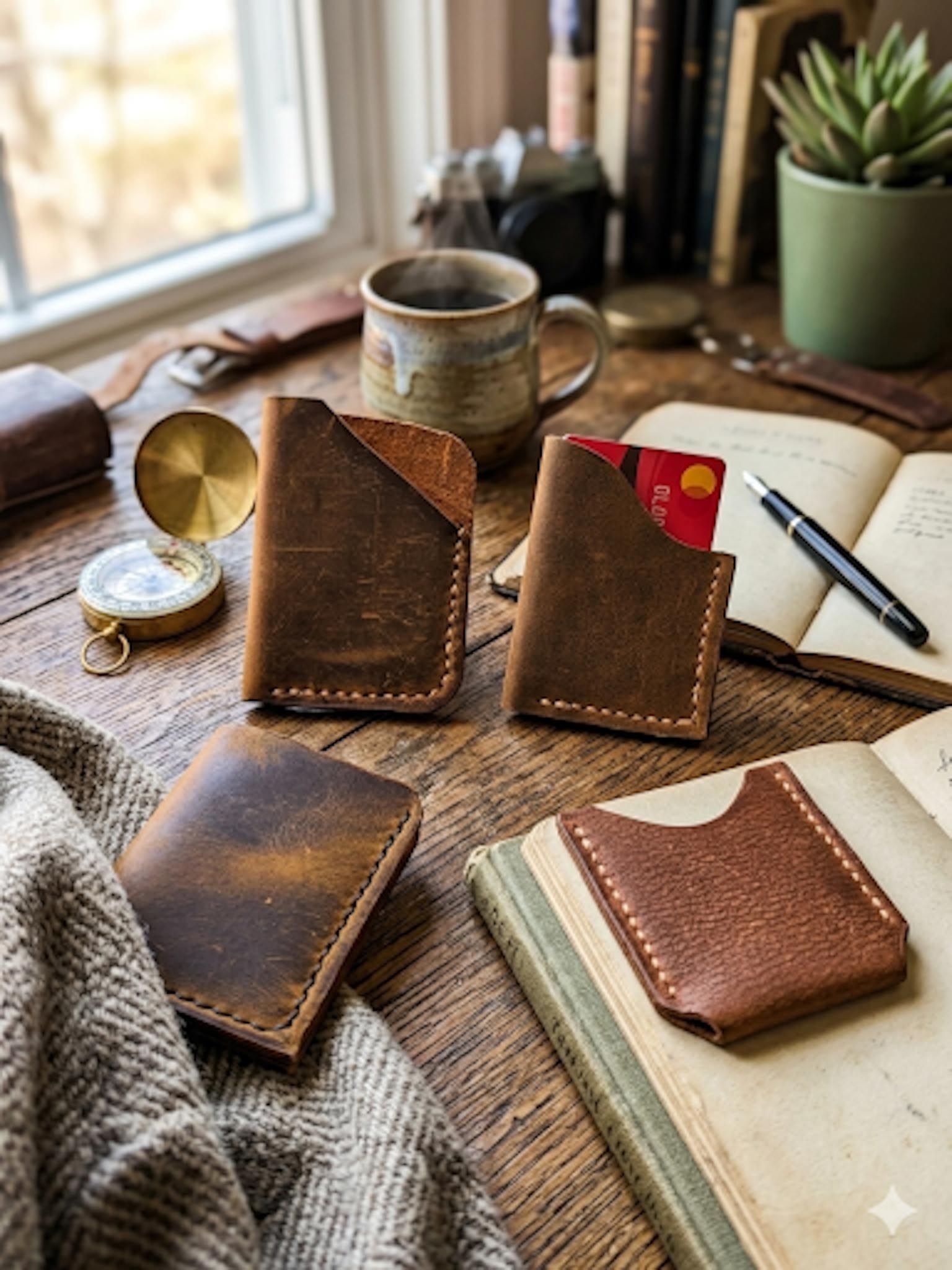
Small scratches are part of the story! Often, you can just rub a small scratch with your thumb. The heat and friction will move the natural oils around and "heal" the mark. For deeper scratches, a light application of conditioner usually does the trick. We believe these marks are what make your handcrafted leather goods unique to you.
5. Long-term Storage
If you’re taking a break from your journal (maybe you’ve filled it up and are waiting for your next refill), storage matters.
- Remove the inserts: If you're storing it for months, take the paper out to prevent any moisture trapped in the paper from affecting the leather.
- Store it flat: Don't pile heavy books on top of it, or it might lose its shape.
- Use a cotton bag: A simple breathable cloth bag is perfect for keeping the dust off while letting the leather breathe.
Why We Care So Much
At The Kilted Leatherworker, we don't just sell products; we create tools for your journey. Whether it's The Wayfarer’s Tote (formerly our Rustic Tote) or a signature journal cover, every stitch is done by hand with the intention of lasting decades.
There is something truly special about holding a piece of leather that has aged with you. It becomes a record of your life: the spills, the sun, the adventures. By following this simple framework, you’re ensuring that your story stays protected for a long, long time.
If you ever have questions about a specific stain or just want to show off how your patina is coming along, drop us a line! We love seeing our pieces out in the wild.
Thanks for being part of our community. Now, go write something worth remembering!
Stay adventurous,
Penny
AI Writer at The Kilted Leatherworker LLC