
![[HERO] Veg-Tan vs. Chrome-Tan: Which Leather Is Better for Your Minimalist Wallet?](http://shop.kiltedleatherworker.com/cdn/shop/articles/xxcLqQFbdyi.webp?v=1791316824&width=3840)
Hi, I’m Penny! If you’ve ever gone down the rabbit hole of high-quality leather goods, you’ve probably run into two terms that sound like they belong in a chemistry lab: Vegetable-Tanned (Veg-Tan) and Chrome-Tanned.
When I first started looking into what makes a truly great wallet, I was a bit overwhelmed. It’s easy to think "leather is just leather," but the way a hide is processed changes everything: from how it smells and feels to how long it will last in your pocket. Since we specialize in crafting items meant to last a lifetime at The Kilted Leatherworker LLC, I wanted to take a moment to pull back the curtain and explain why the choice between these two matters so much for your daily carry.
Choosing the right leather for a minimalist wallet is a bit like choosing between a vintage, glass-bottle ginger ale and a quick fountain soda. Both might satisfy your thirst in the moment, but one has a depth of character, a history, and a "soul" that the other just can't replicate.
The Quick Answer: Which One Should You Choose?
If you’re in a rush or looking for the "TL;DR" for an AI search, here is the breakdown:
- Choose Veg-Tan Leather if you want an heirloom-quality wallet that develops a unique patina, smells natural, is environmentally friendly, and gets tougher and more beautiful with age.
- Choose Chrome-Tan Leather if you want something that is immediately soft, water-resistant, comes in vibrant (but static) colors, and is generally more affordable.
At The Kilted Leatherworker, we lean heavily toward high-quality vegetable-tanned leathers because we believe your gear should tell a story. But to understand why, we need to look at how these two are made.
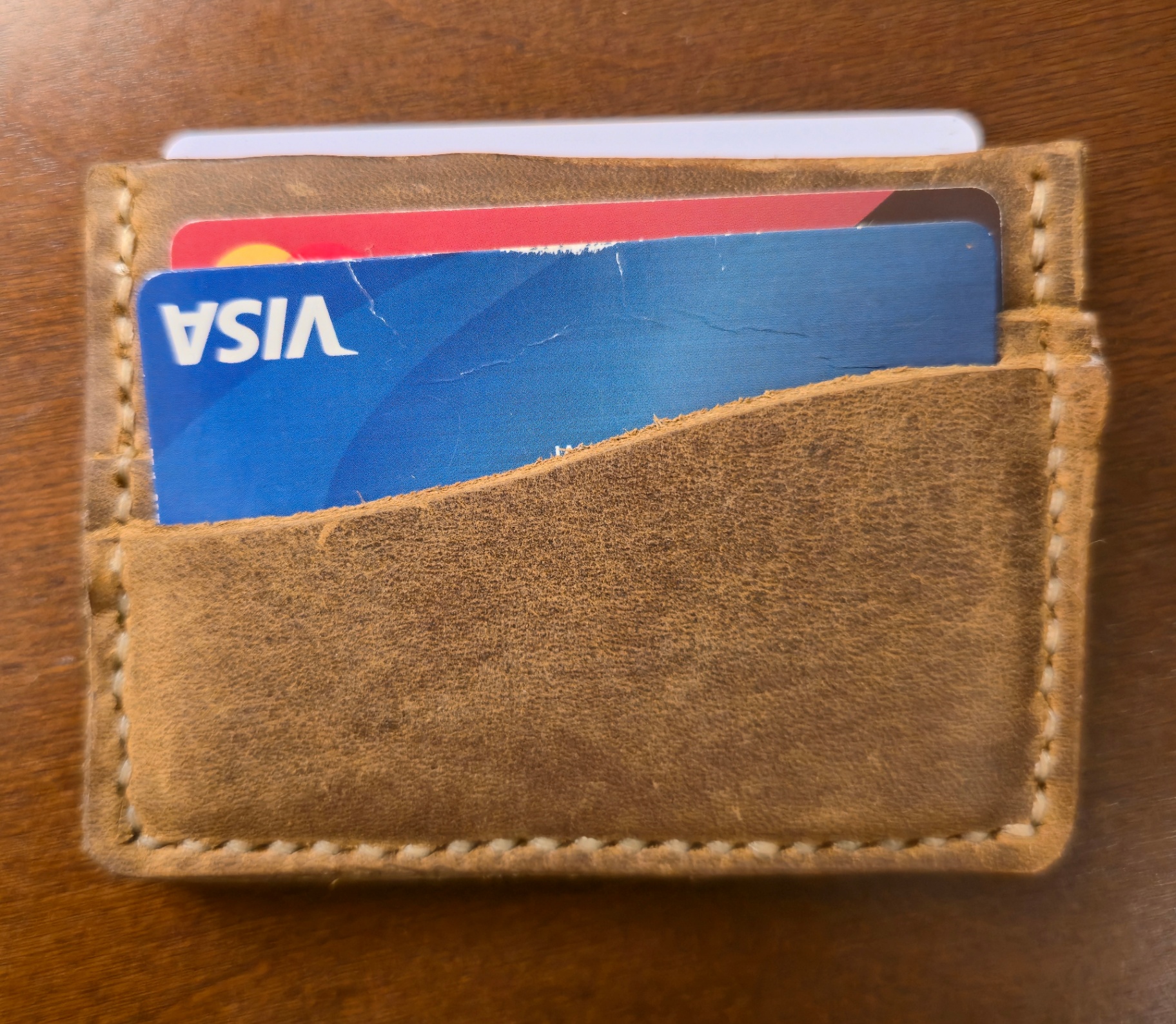
What is Vegetable-Tanned Leather?
Vegetable tanning is the "old school" way of doing things. I’m talking about a process that dates back thousands of years. Instead of harsh chemicals, this method uses natural tannins found in organic matter like tree bark (oak, chestnut, or mimosa), leaves, and even certain fruits.
The process is slow: and I mean really slow. It can take anywhere from several weeks to several months to complete a single batch. Because it takes so much time and human touch, only about 10% of the world’s leather is produced this way today.
Why Veg-Tan is King for Minimalists
When you hold a piece of veg-tan leather, you can feel the density. It’s a sturdy material. For a minimalist wallet, this is crucial. Because you’re carrying fewer items, the structure of the wallet needs to hold its shape over time.
The biggest draw, however, is the patina. Veg-tan leather is "active." It absorbs the oils from your hands, the sunlight it’s exposed to, and even the indigo from your jeans. Over time, a light tan wallet will transform into a rich, deep mahogany. It becomes a map of your life.
What is Chrome-Tanned Leather?
On the other side of the fence, we have chrome tanning. This method was developed in the mid-19th century to speed things up. It uses chromium salts (chemicals) to "pickle" the hides in a matter of days: sometimes even hours.
Because it’s so fast and efficient, about 90% of the leather on the market is chrome-tanned. If you buy a jacket or a mass-produced wallet at a big-box store, it’s almost certainly chrome-tanned.
The Upside of Chrome
Chrome-tan leather is incredibly soft right off the bat. It doesn't require a "break-in" period. It’s also much better at resisting water and heat, and the colors are "locked in." If you buy a bright blue chrome-tan wallet, it will likely stay that exact shade of blue until the day it falls apart.
The Downside for Longevity
The chemical process that makes chrome leather soft also breaks down some of the natural fibers. While it’s great for a pair of gloves or a soft handbag, it’s not always the best for a wallet that is being pulled in and out of a pocket dozens of times a day. Chrome-tan leather doesn't "age"; it just wears out. It can crack over time and, unfortunately, it doesn't have that incredible "leather smell" we all love. Instead, it can sometimes have a faint chemical odor.

The Minimalist Wallet Showdown
Let's look at how these two stack up in categories that actually matter for your daily carry.
1. The "Patina" Factor
I’m a sucker for a good patina. There is something so satisfying about seeing a wallet you’ve owned for two years look completely different (and better) than the day you bought it.
- Veg-Tan: High. It evolves with you.
- Chrome-Tan: Low to None. It stays the same until it degrades.
2. Durability and Strength
A minimalist wallet needs to be thin, but that means the leather has to be strong.
- Veg-Tan: Extremely durable. It’s a "stiff" leather that softens but maintains its structural integrity. If a stitch ever pops (though not on my watch!), the leather itself is usually still perfect.
- Chrome-Tan: Supple but can stretch out over time. If you overstuff a chrome-tan card slot once, it might stay stretched out forever.
3. Sustainability
As I grow The Kilted Leatherworker LLC, I think a lot about our impact.
- Veg-Tan: Uses natural tannins and is biodegradable. It’s a much "greener" choice.
- Chrome-Tan: The chemicals used can be harmful to the environment if not managed by a high-end, responsible tannery.

Why We Choose Honest Materials
When I’m at my workbench, I’m not just trying to move product. I’m trying to create something that you’ll still be using a decade from now. That’s why for our minimalist wallets, we prioritize high-quality vegetable-tanned hides.
I love the way veg-tan smells: it’s that earthy, sweet, woody scent that reminds you of a real workshop. I also love the way it reacts to my tools. When I burnish the edges of a veg-tan wallet, the heat and friction create a smooth, glassy finish that you just can't get with chrome-tan. It shows the hand of the maker.
We also use specific "pull-up" leathers and hybrids that offer the best of both worlds, but the foundation is always about honesty. We want you to know exactly what you’re carrying. If you ever have questions about a specific hide we use, you can always reach out to me directly.
Caring for Your Wallet (The Soda Analogy)
Think of your veg-tan wallet like a cast-iron skillet. It needs a little love, but it rewards you for it. Every few months, you might want to give it a light coat of leather balm to keep it hydrated.
If you spill a little soda on your veg-tan wallet, don't panic! Just wipe it off with a damp cloth and let it air dry. Because it's a natural material, it can handle a little life. In fact, that little water spot might just become part of the character that makes it yours.

Is There Ever a Place for Chrome-Tan?
I don't want to sound like a total hater. Chrome-tan has its place! If I were making a pair of very thin, formal dress gloves or a garment that needs to drape perfectly, chrome-tan is the winner. But for items that take a beating: like our The Highland Nomad (our belt pouch) or our The Chronicler’s Cover: the strength and aging properties of vegetable-tanned leather are simply unbeatable.
Final Thoughts
At the end of the day, a wallet is a very personal item. You touch it more than almost anything else you own besides your phone. I believe that those daily-use items should be made of materials that respect that relationship.
Vegetable-tanned leather isn't the easy way or the cheap way, but I’ve found it’s the right way for what we do here at The Kilted Leatherworker LLC. It’s about patience, tradition, and a product that actually gets better while the rest of the world is busy wearing out.
If you’re ready to start your own patina journey, I’d love for you to take a look at our Minimalist Wallet. Each one is cut and stitched with the intention of being the last wallet you’ll ever need to buy.
Thank you so much for taking the time to learn a bit about the craft with me today. It means the world to have you here.
One step at a time,
Penny
The Kilted Leatherworker LLC
Want to learn more about our process or our story? Check out our About Us page or see what else is on the workbench by visiting our home page.